How does local search decide which dentist to show?
Local results are a separate competition from the rest of search. When someone types “dentist near me”, “emergency dentist open Saturday”, or “dentist in [town]”, Google answers first with a map and three listings, and an AI assistant answers with a short list of nearby practices. Both draw on the same three signals, and only two of them are yours to work on.
| Signal | What decides it | What local SEO for dentists does about it |
|---|---|---|
| Distance | Where the searcher stands relative to your address | Nothing changes the address — but a wrong pin, missing hours, or a closed-looking listing throws the advantage away |
| Relevance | How well your listing and pages match what was asked | The right primary category, every treatment entered as a service, and a page for each location that says what that location offers |
| Prominence | How established and trusted the practice looks | Consistent details across directories, a steady flow of genuine reviews, local links and mentions |
The practical consequence is that a dental practice does not have one map ranking. It has a different one for every street in its catchment. A practice can sit first for searches made at its own front door and disappear for patients two miles away, which is why a single search from the reception desk tells you almost nothing. Local positions should be measured from a grid of points around each location, repeated over time.
What belongs on a dental location page?
For a single-site practice, the homepage often does this job. Once you run two or more sites, each one needs its own page, and each Business Profile’s website link should point to its own location page rather than to the homepage. The test of a real location page is simple: if you could swap the town name and the page would still read true, it is not a location page yet.
True only of this address
- Address, an embedded map, and directions from the main roads and transit stops
- Hours for this site, including any late, weekend, or emergency sessions
- Which dentists and hygienists work here, and on which days
- Treatments offered at this site — not every location offers sedation, implants, or orthodontics
- Parking, step-free access, and photos of this building and its rooms
- LocalBusiness or Dentist structured data carrying this location’s own address and hours
What does not make it a location page
- The group’s generic “about us” text with a new heading
- A list of every suburb within thirty miles
- Stock photos of a smiling patient
- A treatment list copied from the head office site, including services this site does not provide
- A phone number that rings at a central call center with no mention of which site you reached
What about towns where you have no office? Keep local pages for addresses where patients are actually seen. Patients from neighboring towns are reached through strong treatment pages and a Business Profile that ranks across the grid — not through a stack of pages that differ only by place name.
Why does NAP consistency matter, and where does it usually break?
NAP stands for name, address, and phone number. Search engines and AI assistants cross-check these details across your website, your Business Profile, and dozens of directories before they trust that a practice is what it says it is. When the details disagree, that confidence drops — and an assistant that cannot reconcile two versions of your practice is less likely to name either. Dental practices break consistency in predictable ways:
| Where it breaks | What it looks like | Fix |
|---|---|---|
| The practice moved | The old address lives on in directories and map apps | Update the Business Profile first, then the main directories, then smaller listings; mark the old site as moved rather than deleting history |
| Rebrand or acquisition | The founder’s name and the group brand both listed for one address | One name everywhere, exactly as on the signage; the old name explained on the about page |
| Call-tracking numbers | A different number on every directory | The main local number stays primary on every listing; tracking numbers only where a platform supports an additional number |
| Individual dentist listings | A dentist’s personal profile competing with the practice listing | Follow Google’s rules for practitioner listings and keep each one tied to the practice location |
| Duplicate profiles | Two listings for one address, often after a move or a new owner | Merge or remove the duplicate through the platform’s own process |
| Formatting drift | “Ste 200” here, “Suite 200” there | Minor — fix it while you are in the listing, but do not lose sleep over it |
Which directories matter depends on the country. In the US, the usual ones are Healthgrades, Yelp, Zocdoc, Apple Maps, and Bing Places. In the UK, the NHS website’s service listing carries particular weight, alongside Yell, Apple Maps, and Bing. In Australia, the healthdirect service finder, Yellow Pages, Apple Maps, and Bing. Health-fund and booking-platform listings matter wherever patients book through them.
How should a dental practice run its review flow — inside the rules?
Reviews feed the prominence signal, and patients read them before they call. The flow that works is boring and consistent: the same request, at the same moment, to every patient, pointing to the profile of the location they actually visited. The rules come from two places — the review platforms, and the privacy and advertising law of your country — and both apply at once.
| Step | Do | Do not |
|---|---|---|
| Ask | Every patient, with the same short message, after the visit | Ask only the patients who seemed pleased — selective asking breaks Google’s review policies |
| Route | Link to the profile of the location the patient attended | Send every patient in the group to the flagship’s profile |
| Incentives | None | Discounts, gifts, or prize draws in exchange for a review |
| Who reviews | Patients only | Staff, family, or an agency writing reviews for the practice |
| Replying | Thank the reviewer and invite them to contact the practice directly | Confirm that the reviewer is a patient, or mention any treatment — even to correct the record |
| Using reviews in marketing | Check your market’s advertising rules first | In Australia, reproduce testimonials about clinical aspects in advertising — AHPRA restricts this, sharing included |
The reply rule deserves emphasis because it catches careful people. A reply that says “we’re sorry your crown felt uncomfortable” confirms a patient relationship and a treatment in public. Patient-privacy law — HIPAA in the US, UK GDPR and professional confidentiality in the UK, the Privacy Act in Australia — makes that a risk the practice carries. A short, warm, non-specific reply and an offline conversation is safer every time.
How does local SEO for dentists differ in the US, UK, and Australia?
The mechanics — distance, relevance, prominence — are the same in all three countries. What differs is how patients phrase local searches, which details decide between two nearby practices, and which advertising rules your location pages fall under.
United States
- Searches lean on “near me”, the city or neighborhood, and coverage: “dentist that takes [plan]” is a common local query
- Location pages should state accepted plans and payment options accurately, per site
- Many metros have large Spanish-speaking communities searching in Spanish — a separate local line covered in Spanish SEO for dentists
- Performance claims on any page follow FTC rules
United Kingdom
- The first fork is NHS or private: “NHS dentist near me” and “private dentist [town]” are different searches with different intent
- Say plainly, per location, whether you are accepting new NHS patients — and keep the NHS website listing in step
- Town names and postcode districts carry local intent
- Prices, offers, and any featured reviews fall under ASA/CAP rules; registered dentists answer to the GDC for what appears under their name
Australia
- Searches are usually suburb-level: “dentist [suburb]”
- Health-fund arrangements often decide between two nearby practices — state them accurately for each location
- Keep the healthdirect listing current
- AHPRA-compliant by default: no testimonials about clinical aspects on your site or in ads, and no outcome claims
How should a multi-location dental group run local SEO?
Every location competes in its own local market, so a group of five practices is really running five local SEO programs that share a brand. The groups that do this well treat each site as its own unit and keep the brand layer simple:
- One Business Profile per staffed location, each owned by the group’s own account, with the business name exactly as it appears on the signage — no keywords added.
- One domain, one page per location (for example /locations/[town]/) rather than separate microsites, so authority built by one site helps the others.
- One measurement grid per location, reported separately. A group average hides the site that is slipping.
- Clear treatment emphasis where locations overlap. Two sites three miles apart will compete for the same searches; if only one offers implants or sedation, its page and profile should say so and the other’s should not.
- Phone routing that names the site. A central call team is fine, as long as each listing’s number reaches someone who knows which location the caller found.
Do AI assistants change local search for dental practices?
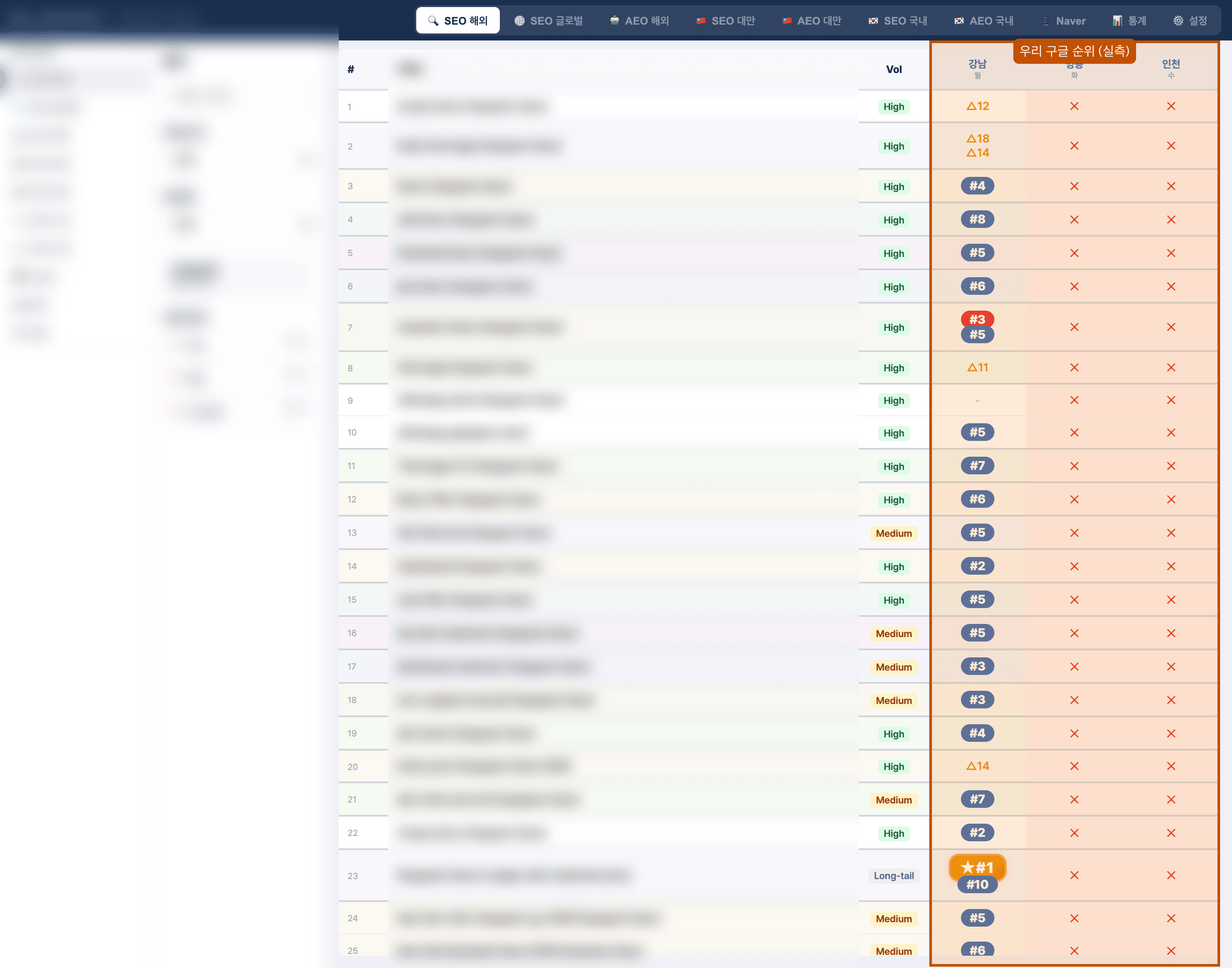
They add a second local surface. Questions like “which dentist near me is good with nervous patients?” or “where can I get an emergency appointment this weekend?” are increasingly put to ChatGPT, Gemini, and Google’s AI Overviews, which answer with named practices. Those answers are assembled from the same local raw material — listing details, location pages, reviews, and directory entries — which is why NAP consistency now matters twice. Local questions put to AI need to be checked location by location, the same way map positions are.
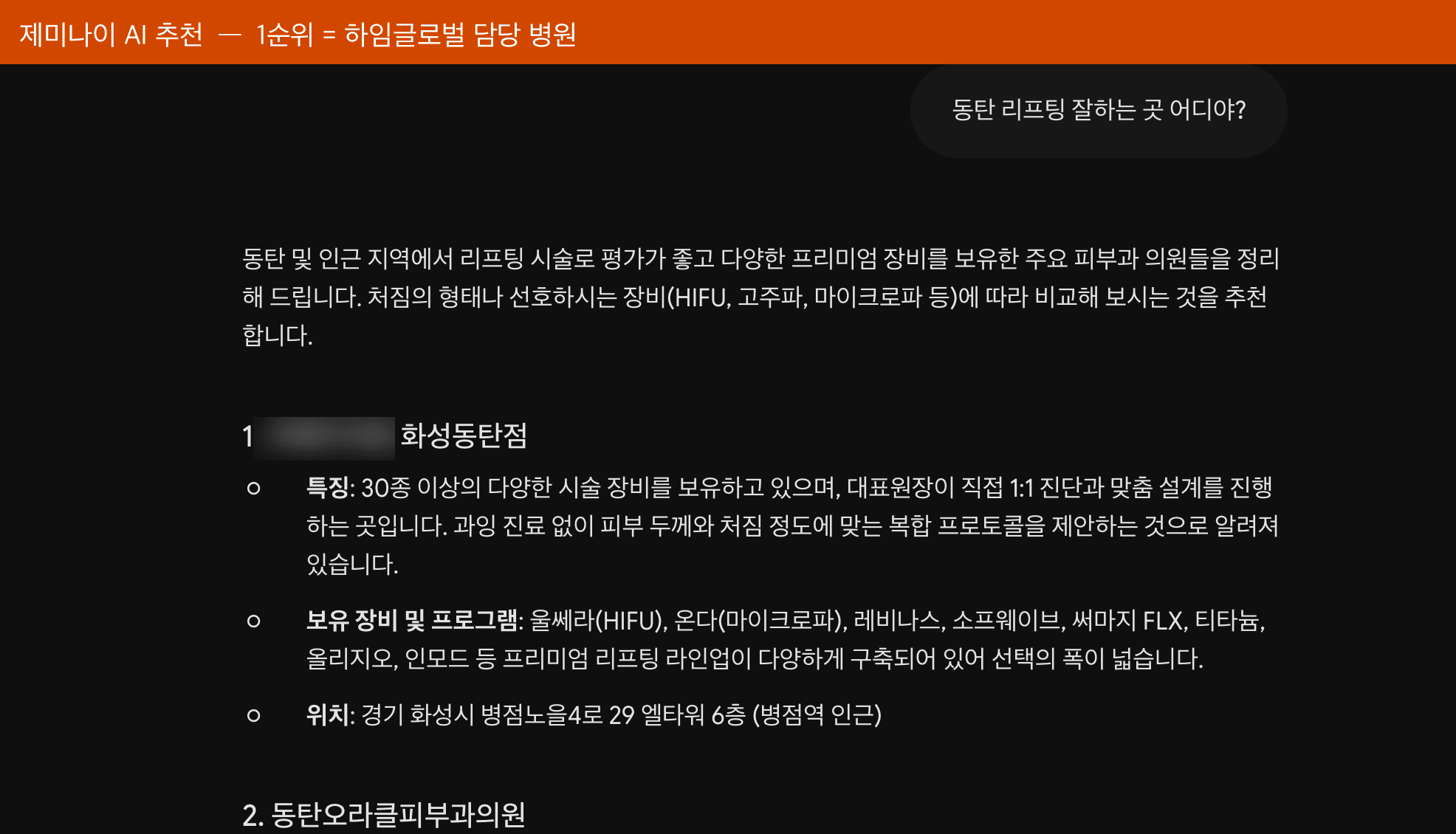
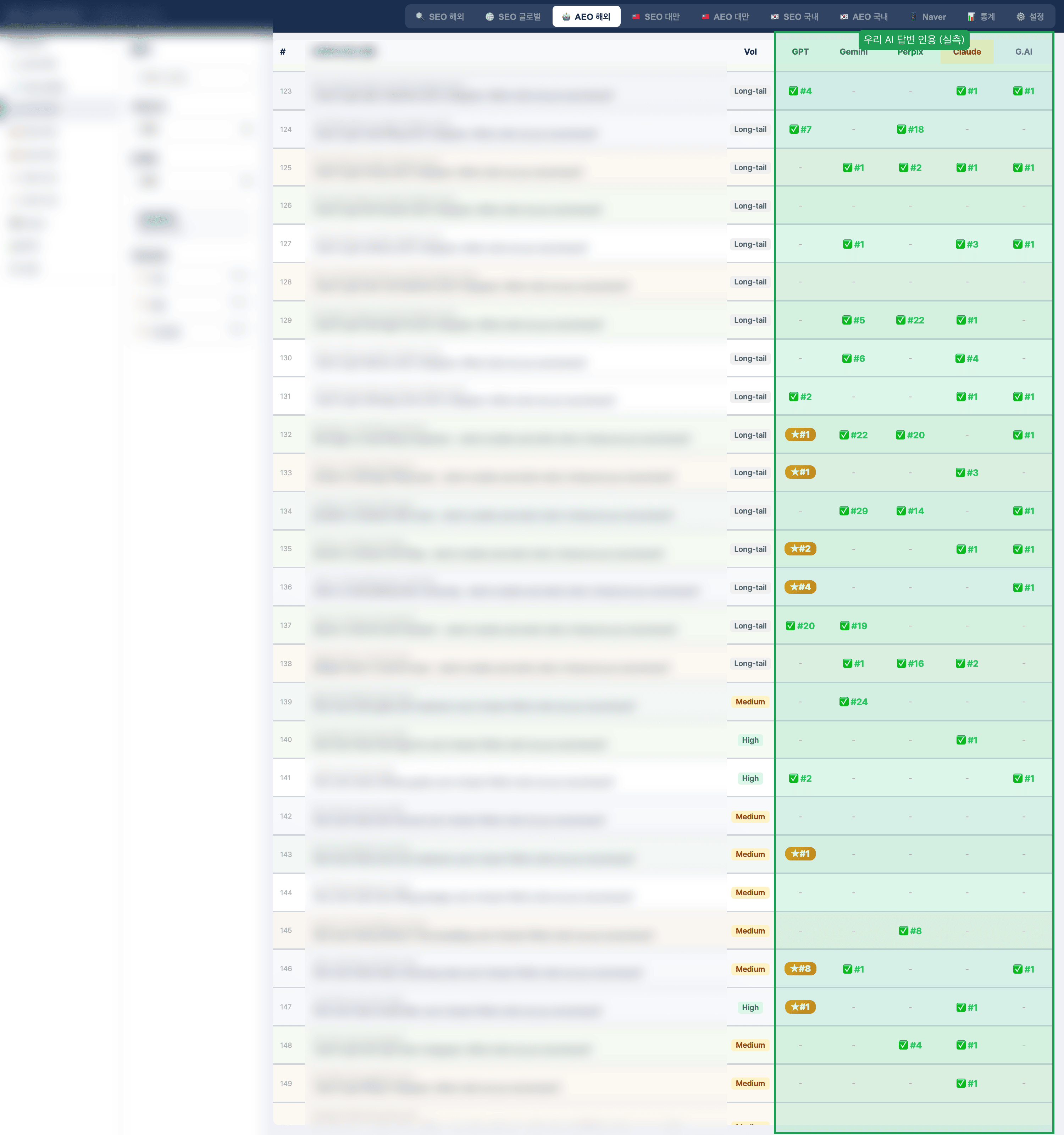
How assistants decide whom to name is explained in how AI decides which clinics to recommend.
What does local SEO for a dental practice cost with us?
Local SEO is usually sold per location, on a retainer, with multi-location dental groups commonly paying $10,000–25,000 a month for full digital programs. We charge no retainer at all. $0 upfront — we take 30% of collected revenue from the lines you assign to us, CRM-verified, no per-patient counting. We fund location pages, tracking, and the multilingual response line; you are invoiced monthly from your own records. In a group, you decide which locations and which lines to assign — one site to start, or all of them — and the base is designed during the free audit.
Local patients are the base of every engagement, because they are where most dental revenue comes from. The same location pages can then carry an upside: nearby communities searching in Spanish or Chinese, and patients comparing a local practice with a trip abroad, covered in competing with dental tourism. The 30% is never a payment for individual patients; HEIM GLOBAL does not count, steer, or broker anyone. Three terms apply every time: $0 upfront · non-exclusive · monthly CRM settlement.
Is there evidence that this kind of local work pays off?
Our record comes from Seoul, where clinics compete block by block and about two million international patients arrive each year. In two dermatology clinics there, foreign-patient revenue in the language lines we handled rose +200% and +186%.1 They are not dental practices; what transfers is the local method — place-by-place measurement, consistent listing data, location pages with real detail.
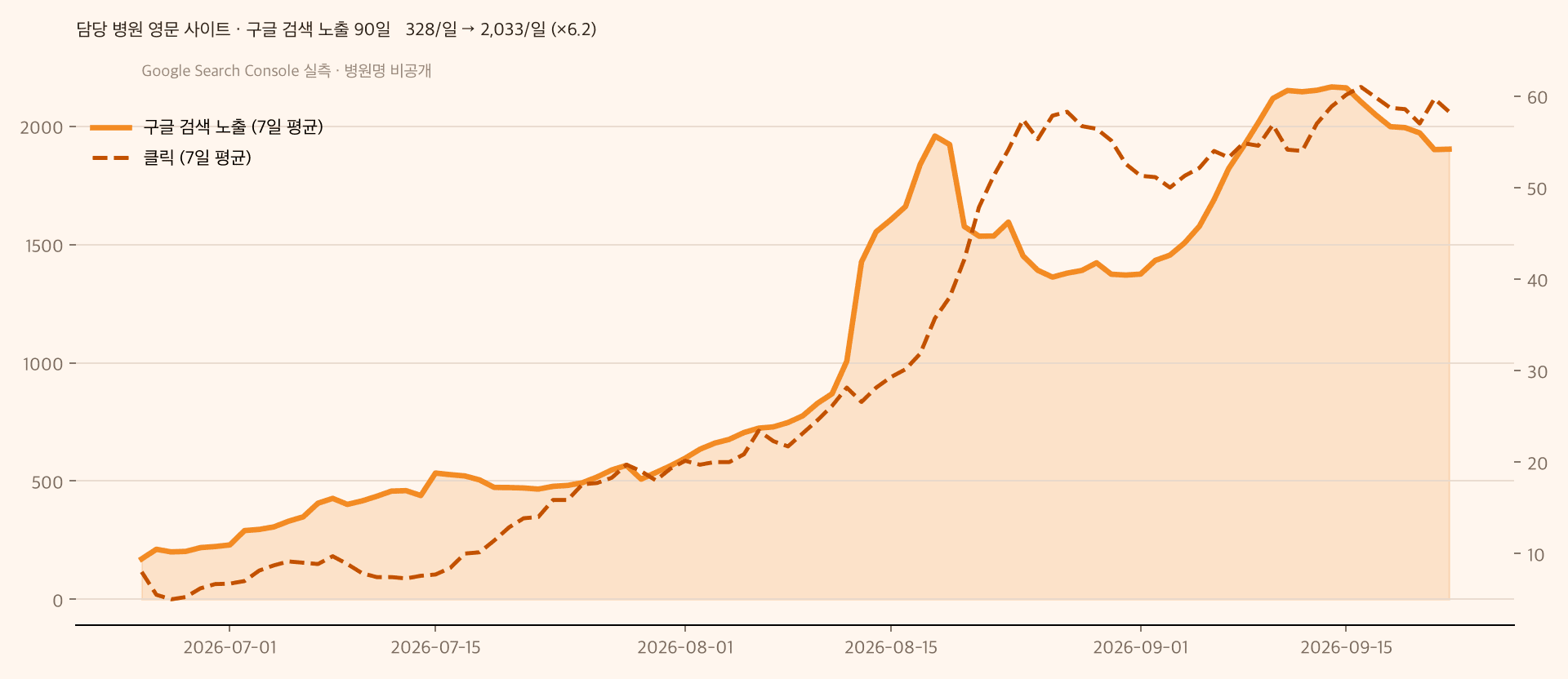
1 Source: the two Seoul dermatology clinics’ own CRM data — foreign-patient revenue in the language lines assigned to HEIM GLOBAL, measured against their pre-engagement baseline. Individual results vary with specialty, location, and competition. Clinic names stay under NDA; live dashboards can be walked through on the call.
'/%3E%3C/svg%3E)