
What are you actually hiring when you hire a dental SEO agency?
Search “dental SEO company” and the results look interchangeable: the same promises about the map pack, the same screenshots of rising graphs. Behind them sit four quite different kinds of provider, and the differences matter more than the sales deck suggests. None of them is right by default. Each has a typical strength, a typical failure, and one question that exposes it early.
| Provider type | Typical strength | Typical risk | Question that tests it |
|---|---|---|---|
| Dental-only SEO firm | Knows treatment vocabulary, practice software, and dental advertising rules | Template sites and recycled copy shared by clients in different towns | “Will any text on my pages also appear on another client’s site?” |
| General SEO agency | Technical depth and a wide toolset | Does not know which treatments carry your revenue, or which claims a dentist may not make | “Who on the team has written for a dental or medical practice?” |
| Independent dental SEO consultant or expert | Senior attention and a direct line | Capacity — one busy month and the work stalls | “Who does the work when you are unavailable?” |
| Full-service dental marketing firm | One invoice across ads, social, web, and SEO | SEO hours quietly absorbed by ad management | “How many hours a month go to SEO, specifically?” |
One issue cuts across all four: who else the agency serves near you. Some dental SEO marketing agencies take only one practice per area; others work for three practices on the same high street and let their pages compete. Neither is automatically wrong, but you should hear the answer before you sign, not discover it in the map results.
What dental SEO itself should include — the map pack, the Business Profile, treatment pages, reviews, technical health — is laid out in our dental SEO guide. This page assumes you know the deliverables and are deciding who should deliver them.
How do you evaluate a dental SEO proposal?
Read the evidence before the price. A proposal written for your practice contains things that could only come from looking at your market. A template contains statements that would be equally true of any practice in any town, and a price that was set before anyone looked.
Signs the proposal was researched
- Map positions measured from several points around the practice, with the competitors that outrank you named
- A short list of missing treatment pages, ordered by what they are worth to you — implants and aligners before a page on flossing
- Specific notes on your Business Profile: category, listed services, duplicate or unverified listings
- What ChatGPT, Gemini, and AI Overviews currently say when asked about your treatments in your town
- A frank read on how crowded your area is, and what that means for timing
Signs it is a template
- Deliverables counted in units: “8 blog posts, 20 backlinks, 4 hours”
- Keyword lists with treatments you do not offer or towns you do not serve
- A ranking promised by a date
- No mention of your current site, listing, or reviews
- The same price tier for a rural single-chair practice and a downtown group
Then ask about the work nobody sees in a proposal: who writes the treatment pages, and who checks them for clinical accuracy. A writer who cannot explain the difference between an implant-supported bridge and an implant-retained denture will produce pages that read that way, and patients notice before search engines do. Your dentists should approve every treatment page. A good dental SEO specialist builds that sign-off into the schedule instead of treating it as a delay.
Which contract terms matter most — lock-in, ownership, and exit?
Most regret about a dental SEO company starts in the contract, because its terms only matter on the day you want to leave. Read it with that day in mind. The table lists the clauses that decide how painful the exit is.
| Clause | What to look for | Why it matters at exit |
|---|---|---|
| Minimum term | Month-to-month, or a short term with a clear notice period | SEO takes months to show, but a long lock-in moves all of that risk onto the practice |
| Domain and hosting | Registered to the practice, in an account the practice controls | A domain held in an agency account is the hardest asset to get back |
| Google Business Profile | Practice as primary owner; agency as manager | Removing a manager is quick; recovering ownership can be slow and uncertain |
| Analytics and Search Console | Properties created under a practice-owned Google account | Years of history leave with whoever owns the property |
| Pages and images | Ownership after exit stated in writing | Some agencies license content and take it down when you leave, and the rankings go with it |
| Call-tracking numbers | A plan to remove or transfer them | Numbers copied into directories outlive the contract and break your listing consistency |
| Termination fee | None, or a fixed amount in dollars | “Balance of term payable” turns a one-year contract into a one-year bill |
On our side, the answers are short. Your domain, Business Profile, and analytics stay in your own accounts; we work through manager access. The agreement is non-exclusive. What happens to the pages we fund and operate if you leave is agreed in writing before work starts — ask us for it, as you should ask anyone. And have your healthcare attorney read the agreement before you sign.
What should a dental SEO report show each month?
A report is useful only if you can decide something from it. Many dental SEO reports are built to prove that work happened: posts published, links built, hours logged. Those are inputs. A report you can act on runs from early signals to money, in three layers.
| Layer | What it should show | What should not stand in for it |
|---|---|---|
| Visibility | Map positions across a grid around each location; organic positions for treatment-plus-town terms; whether AI assistants name the practice | One “average position” figure for the whole site |
| Response | Calls, booking clicks, and form starts from search, split by location and by treatment page | Sessions and bounce rate on their own |
| Revenue | New-patient production attributable to search, read from your practice-management system | An agency estimate of “lead value” |
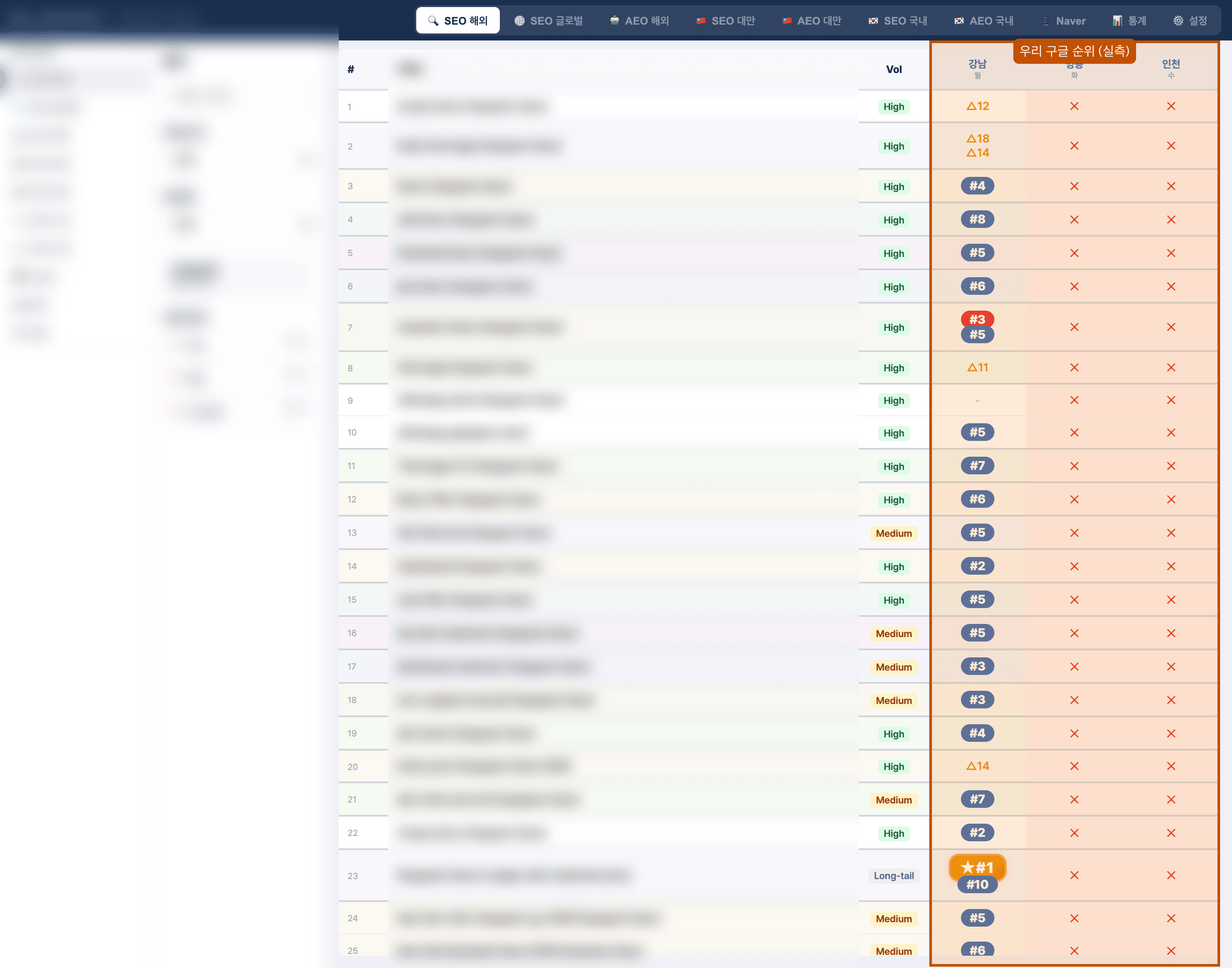
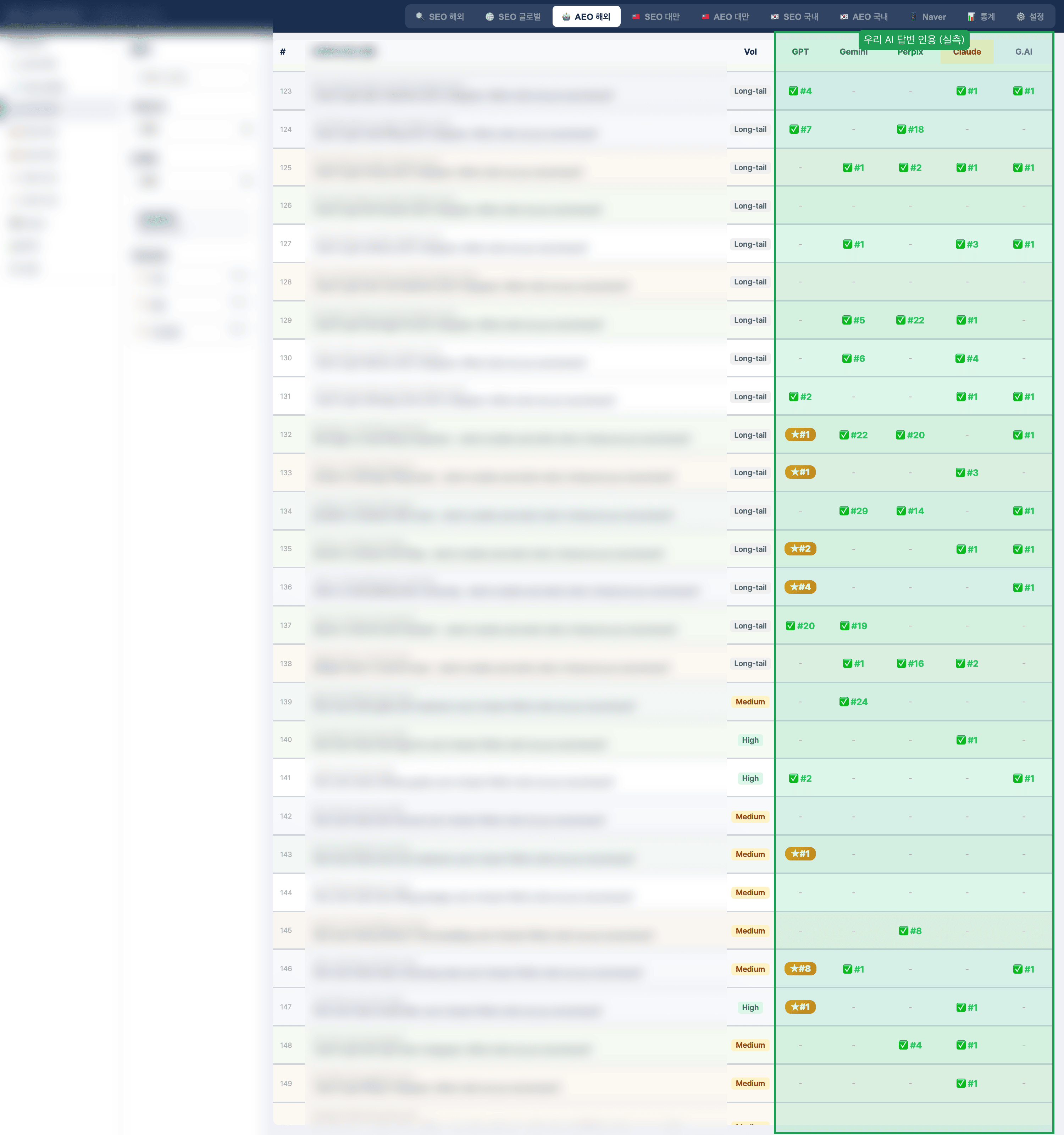
Visibility moves first, revenue last, and a report that stops at the first layer leaves the important question unanswered. Ask for live access as well as the monthly summary: if the rank tracker and AI logs exist, there is no reason you cannot see them. These are the two instruments we run, and every client sees the same screens we do.
If a report shows “leads”, ask how a lead is defined and how you can check it against the appointment book. Lead counts are easy to inflate — a wrong number dialed, an existing patient calling through a tracking line — which is how pay-per-lead marketing earned its reputation among dentists. Production recorded in your own system is much harder to dress up.
What should you ask a dental SEO company before signing?
Twelve questions, each with the kind of answer that should reassure you. Bring the list to every call, ours included.
- “Which competitors did you look at, and why do they outrank us?” — They are named, and the reasons are specific: categories, reviews, a treatment page you lack.
- “How do you measure our map position?” — From a grid of points around the practice, not one search from the front desk.
- “Which treatment pages would you write first?” — Ordered by value to the practice, not by how easy they are to write.
- “Who writes them, and who checks the dentistry?” — A named writer, and sign-off by one of your clinicians.
- “Is any of our copy shared with another client?” — No.
- “Do you work for other practices near us?” — A straight yes or no, and how conflicts are handled.
- “Which of our accounts do you need, and at what level?” — Manager access to accounts the practice owns.
- “What happens to our pages, listing, and phone numbers if we leave?” — It is written into the contract.
- “How do you handle patient reviews?” — Every patient asked the same way; nothing written, bought, or filtered by the agency.
- “How will we see what AI assistants say about us?” — Repeated, logged checks across several engines, not a single screenshot.
- “Which advertising rules apply to our pages?” — FTC endorsement rules in the US, ASA/CAP and GDC standards in the UK, AHPRA guidelines in Australia — with you approving each page.
- “What does a bad month cost us?” — On a retainer, the same as a good month. Under a results-based fee, less.
Retainer or 30% of results — which fee model fits a dental practice?
Standalone dental SEO retainers commonly run $750–5,000 a month, with most practices paying $1,000–2,500. A retainer buys effort at a fixed price, whether new patients arrive or not. That suits some practices well, and it is worth being honest about which.
A retainer fits when…
- You want a fixed, predictable cost, even in your strongest months
- Someone in the practice can direct the agency and judge the work
- The job is mostly maintenance on a site that already ranks well
30% of results fits when…
- You have paid retainers before without seeing production move
- You would rather the agency carry the cost of slow months
- Your practice-management system or CRM can show new-patient production by source
Our model is the second one. $0 upfront: the fee is 30% of collected revenue from the patient lines you assign, CRM-verified, with no per-patient counting. We fund the pages, hosting, tracking, and multilingual response line; you are invoiced once a month from your own records. Which lines you assign, and what the base leaves out, is designed around your practice during the free audit. The trade-off is real: in an exceptional month, 30% can come to more than a retainer would have. That is the price of moving the risk off the practice.
It is also not a payment for patients. HEIM GLOBAL never counts, steers, or brokers individuals; the 30% is a flat marketing-services rate on a revenue pool. In the US the fee applies to self-pay and cash-pay dentistry, with federal-program business excluded, and practices in stricter states such as Florida, New York, and California can choose a flat-tier alternative. The same three terms come with every agreement: $0 upfront · non-exclusive · monthly CRM settlement. For wider benchmarks, see healthcare marketing agency cost; if you are leaving a retainer, no-retainer marketing agency covers the switch.
What evidence should a dental SEO agency show — and what is ours?
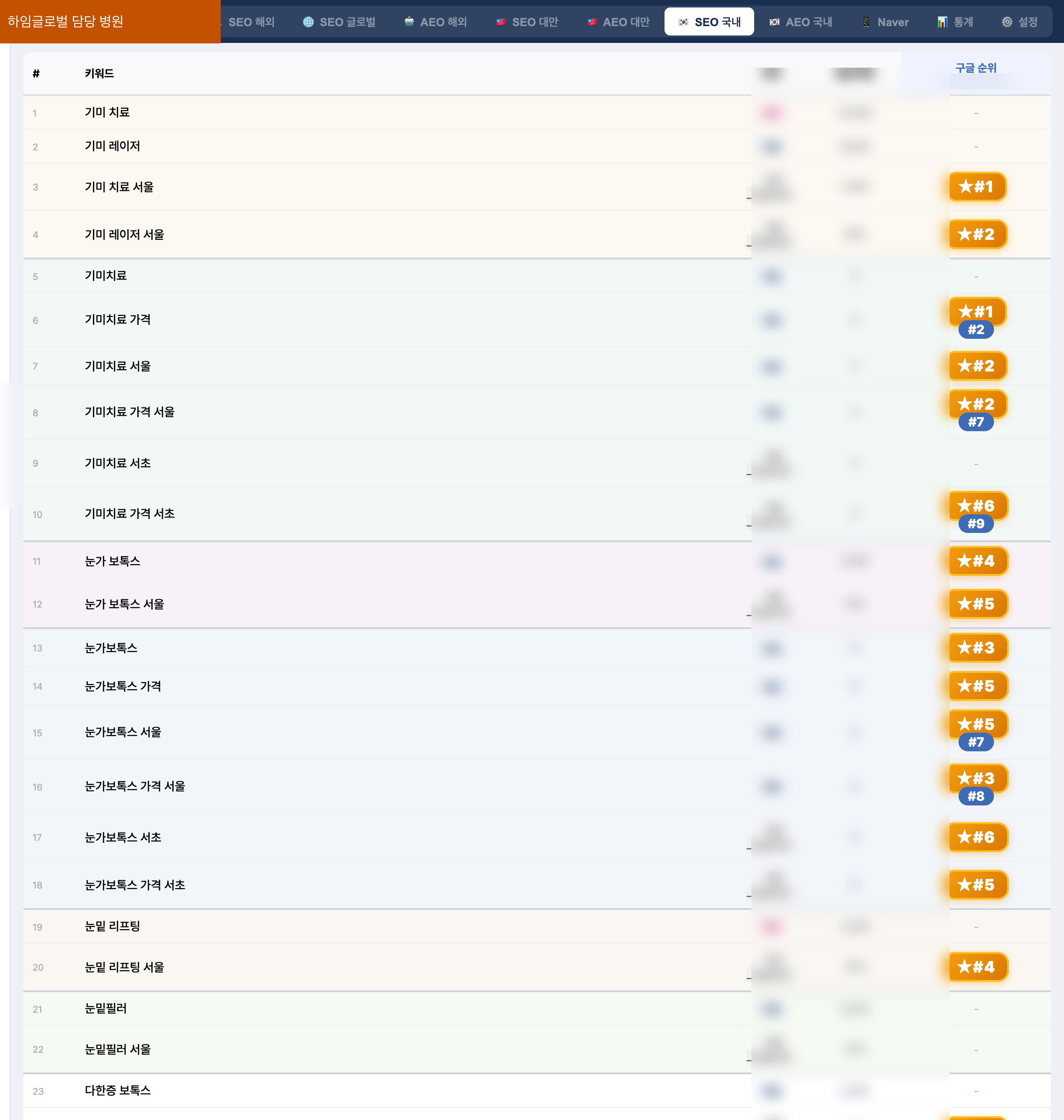
Ask for evidence you can check yourself: live dashboards, Search Console exports, a reference call. A screenshot of one first-place keyword proves very little; anyone can find a term nobody else wants. Our own record comes from Seoul, among the most crowded clinic markets anywhere, with about two million international patients a year. Two dermatology clinics there grew foreign-patient revenue in the language lines we ran by +200% and +186%.1 They are dermatology, not dentistry, and we say so plainly: what transfers is the method — treatment-level pages, consistent practice data, daily measurement of rankings and AI answers.
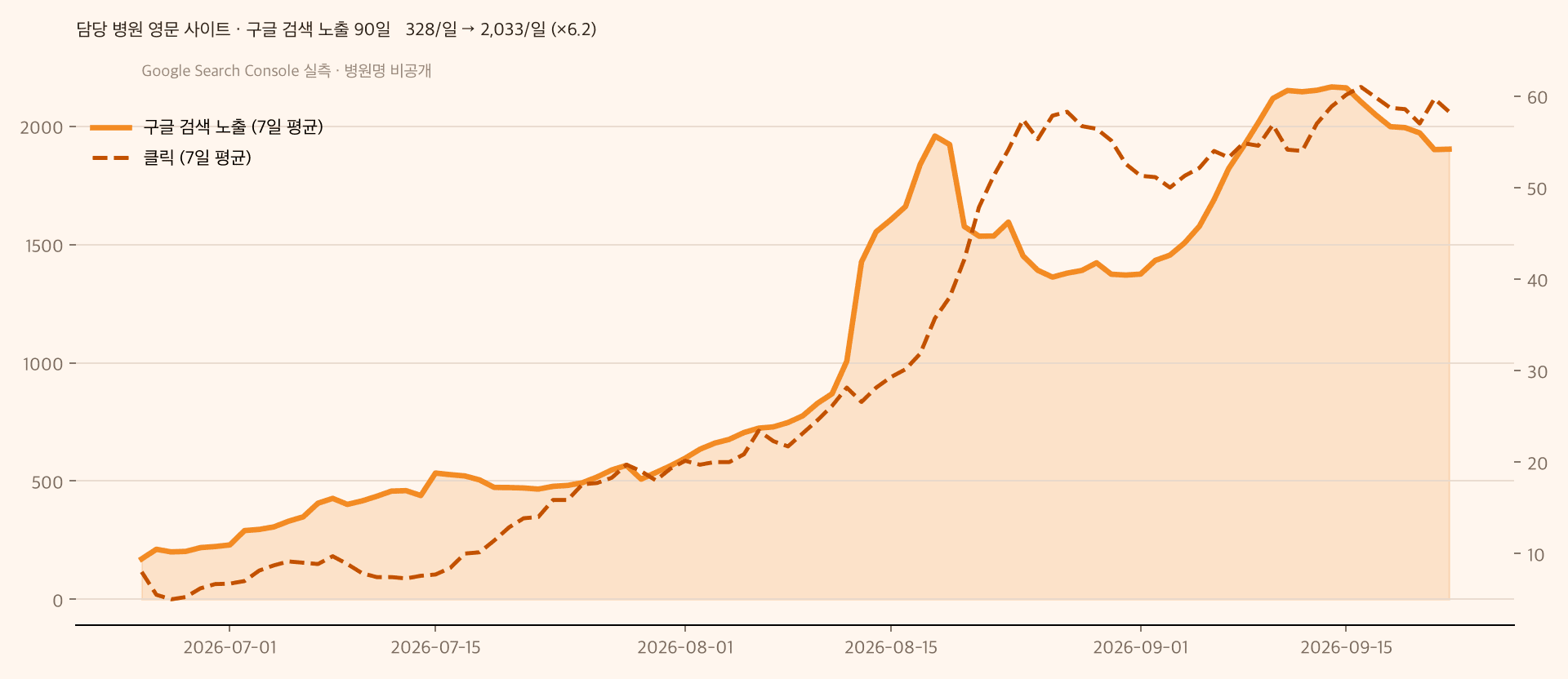
1 Basis: internal CRM records of two dermatology clinics in Seoul, comparing foreign-patient revenue in the language lines assigned to us with each clinic’s earlier baseline. Individual results vary by specialty, location, and competition. Names are under NDA; we show the live dashboards in full on a call.
What should the first weeks with a new dental SEO agency look like?
Whoever you choose, the opening weeks should be visible and unglamorous: access set up on accounts the practice owns, listing and technical errors fixed, a baseline report you can compare against later, and the first treatment pages drafted for your dentists to review. If the first month brings a strategy deck and nothing you can see on the site, ask why. With us, the starting point is the free AI-visibility audit — where the practice stands today in Google, ChatGPT, and Gemini — and, if the market has room, an agreement on which patient lines you assign. Local patients are the base we build first; Spanish- or Chinese-speaking communities nearby are an upside the same pages can carry.
'/%3E%3C/svg%3E)