
What does a healthcare advertising agency actually run?
Most medical advertising agencies work across three surfaces. Each one has a different job, and each one stops the moment funding does. Knowing what remains afterwards is the clearest way to compare healthcare advertising companies.
| Channel | What it is good at | What it needs from the practice | What remains when spend stops |
|---|---|---|---|
| Google search ads (PPC) | Catching patients already searching for a treatment in your area | Landing pages per treatment, accurate hours, fast inquiry response | Nothing in the ad slots; whatever the landing pages earned organically |
| Display and video (YouTube, Google network) | Awareness and remarketing to past visitors | Creative that stays inside health ad rules; consent-based audiences | Some brand recall, hard to measure |
| Meta (Facebook, Instagram) | Elective and aesthetic treatments, events, new-location launches | Images and claims that pass both Meta policy and your regulator | Followers and a pixel history, if the account is yours |
| Organic search assets | Treatment pages, organic rankings, AI-search citations | Clinical review and approval of every page | Not tied to ad spend — the pages keep working |
A good healthcare ad agency treats the first three as a throttle: turn it up to fill a new provider's diary, turn it down when organic demand carries the load. A poor one treats them as the whole strategy, because spend is what its fee is tied to.
Which health advertising policies decide what you can run?
Paid media in healthcare passes two filters before a patient sees it: the platform's own health policies, then the advertising law of your market. An agency that only knows the first one will get ads approved that your regulator would not.
What do Google's healthcare ad rules restrict?
Google's healthcare and medicines policy limits ads that mention prescription drugs and certain treatments, and some categories — online pharmacies and addiction treatment services among them — can only advertise after certification, typically through LegitScript. Separately, Google's “health in personalized advertising” rules stop advertisers from targeting people based on health conditions. A 2025 update eased this for campaigns aimed at healthcare professionals in their professional capacity, which matters for B2B campaigns but not for patient-facing ads. Treatment names in ad copy also tend to draw closer review, so the wording of headlines deserves as much care as the targeting.
What does Meta not allow in health ads?
Meta's advertising standards do not allow ads that assert or imply knowledge of a person's health condition — “Struggling with hair loss?” written to the reader is the classic rejection. Detailed targeting by health interests has also been narrowed. Practical effect: Meta health campaigns lean on location, age where lawful, and broad interest groups, with the creative doing the selecting.
Which market rules apply on top of the platform?
US — FTC
- Results shown in an ad are read as typical; a disclaimer does not rescue a misleading one
- Agencies share liability for deceptive ads they knew, or should have known, were misleading
- Before-and-after images and patient stories need written patient authorization under HIPAA
UK — ASA/CAP and GMC
- Cosmetic interventions: no time-limited offers, no ads aimed at under-18s, nothing that trivializes treatment
- Testimonials must be genuine and representative; outcomes cannot be promised
- Doctors stay personally responsible for advertising placed in their name
Australia — AHPRA
- No testimonials about clinical aspects, including ones you share or link to
- Cosmetic procedure guidelines in force from 2 September 2025 restrict higher-risk non-surgical ads and ads to minors
- AHPRA-compliant creative is a precondition, not an upgrade: penalties reach AUD 60,000 (individuals) and AUD 120,000 (companies)
Who should own your healthcare ad accounts?
The practice, without exception. Ad accounts accumulate years of conversion history that bidding algorithms learn from; losing that history when you change agency resets performance to zero. Before a campaign launches, check that each item below is registered to the practice and that the agency holds manager-level access only.
| Asset | Correct setup | Warning sign |
|---|---|---|
| Google Ads account | Created by the practice; agency linked through its manager account | Your campaigns live inside the agency's own account |
| Meta business portfolio and ad account | Owned by the practice; agency added as a partner | Page or ad account sits in the agency's business manager |
| Payment method | Practice card or invoicing in the practice's name | Spend billed through the agency with an undisclosed markup |
| Analytics and conversion tags | GA4 property and tags owned by the practice | Tags fire into an agency property you cannot see |
| Call-tracking numbers | Ported to the practice or kept off your listings | Numbers that disappear, with your call history, when the contract ends |
A simple exit test: ask the agency to describe, in writing, what you would hold on the day after cancellation. If the honest answer is “very little,” the contract is doing the retaining.
How should healthcare advertising be measured?
By collected revenue, traced through five steps: click, inquiry, booked appointment, attended visit, payment. Platforms report the first two well and the last three not at all, which is how campaigns end up optimized for cheap form fills that never turn into patients. Importing booked and paid outcomes from your CRM back into the ad platform as offline conversions lets bidding learn from real patients rather than clicks.
Two habits to drop. Counting every call over a few seconds as a “lead” inflates results with existing patients ringing to reschedule. And trusting an agency report over your own records repeats the problem that gave pay-per-lead vendors their reputation in healthcare: attribution claimed by whoever runs the tracking. The number that settles disputes is the one in your practice-management system.
Ad spend or compounding assets — which should a practice fund?
Both, in proportion to how fast you need patients and how long you plan to stay. Search clicks are expensive in medicine: the cross-industry Google Ads average sits around $5.26, healthcare around $5, and dentists and dental practices around $7.85 per click — before an agency's management fee. Every one of those clicks has to be bought again next month.
| Question | Paid media (rented) | Organic pages and AI citations |
|---|---|---|
| Speed to first patient | Days, once ads are approved | Weeks to months |
| After the ad budget stops | Flow stops with the budget | Pages keep ranking and being cited |
| Can a competitor outbid you? | Yes, every auction | Only by building better pages |
| Appears in AI answers? | Not through organic citation | Yes, when pages answer patient questions directly |
| Best use | New providers, launches, seasonal gaps | The steady base of local patients, plus language lines for the upside |
Ad spend cannot buy an organic ranking or an AI citation; those are earned by the pages themselves. That is the half of the plan we build. How AI engines choose which practice to name is explained in how AI recommends clinics.
When does PPC for dentists pay off?
Dental search ads earn their cost on urgent and high-value intent: emergency appointments, implants, and clear aligners, searched with a town attached. They waste money on vague terms like “dentist” across a wide radius, and on any ad that lands on the homepage instead of a page about the treatment searched. A dental PPC agency worth hiring will tighten the radius around your real catchment, split campaigns by treatment, and report booked chairs rather than clicks.
Dental advertising also carries a defensive job in the US, where around 850,000 Americans were expected to travel abroad for dental work in 2025. Paying per click to reach every price-shopper is costly; pages that answer lifetime-cost and aftercare questions do the persuading for free. That angle is developed in competing with dental tourism, and the Spanish-language line in Spanish SEO for dentists.
What does the organic side look like when it works?
Here are the instruments we watch daily, so you can judge the organic half on evidence. Our record is from Seoul, where two dermatology clinics grew foreign-patient revenue in the language lines we ran by +200% and +186%1 — with organic and AI visibility, not ad budgets, doing the work.
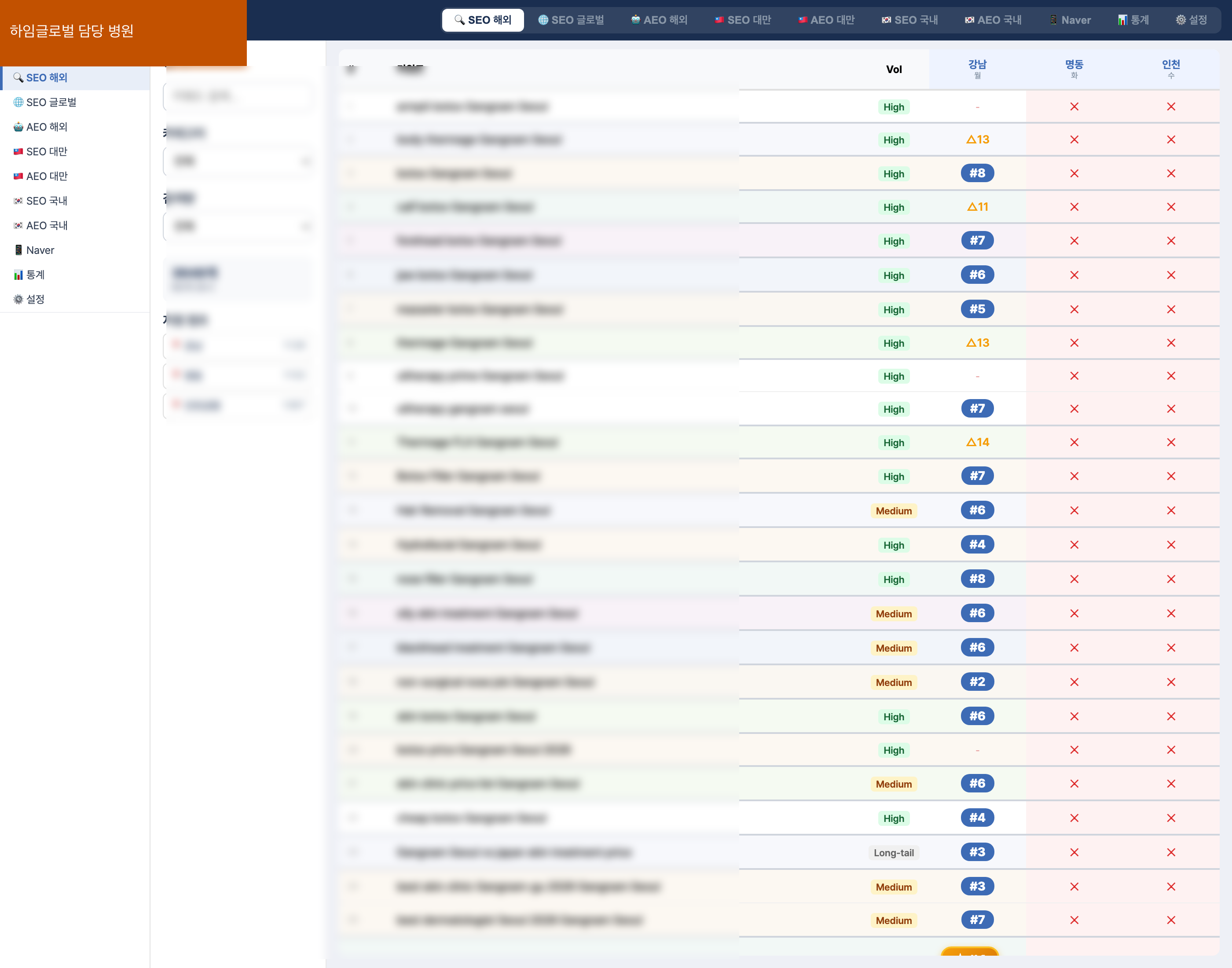
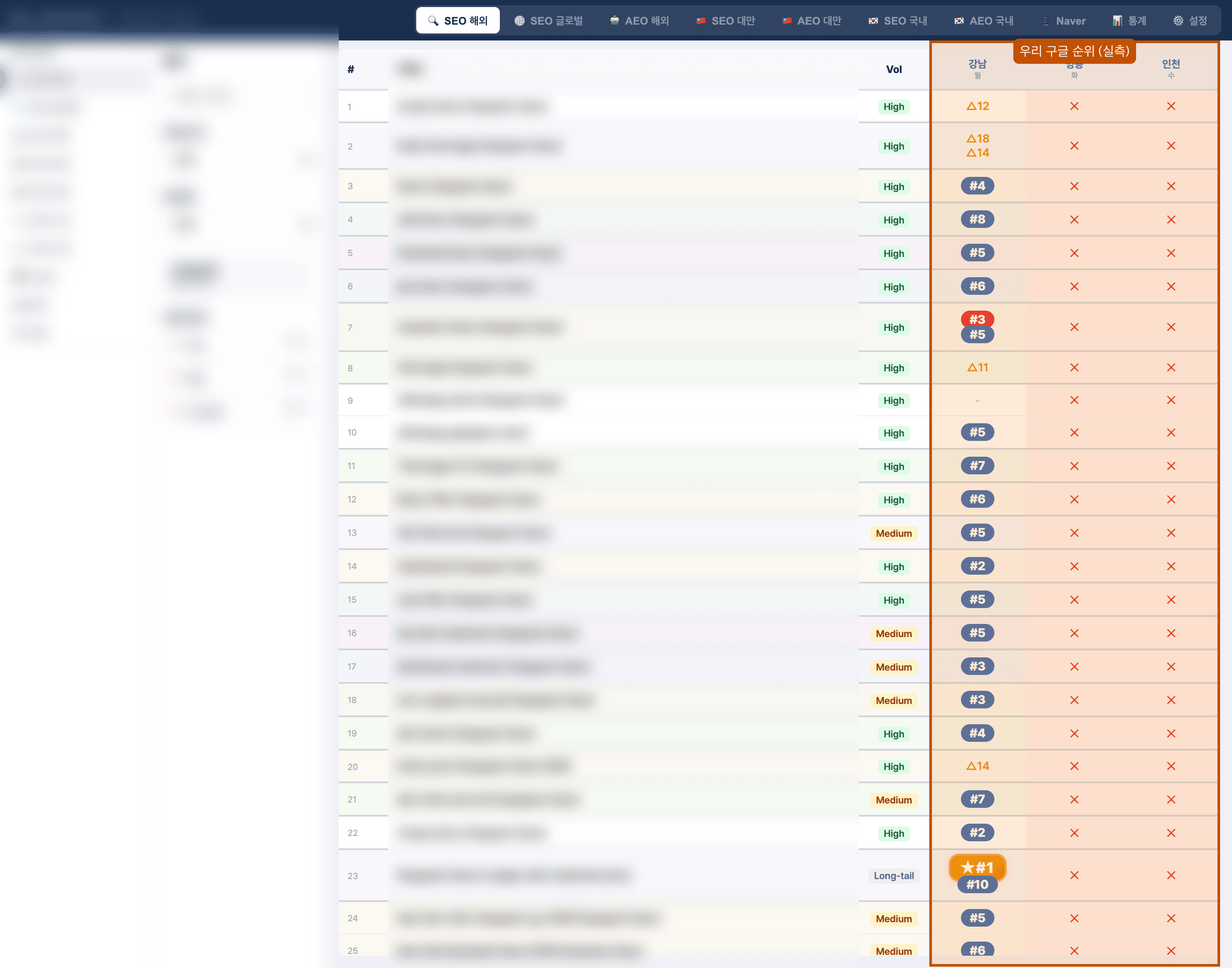
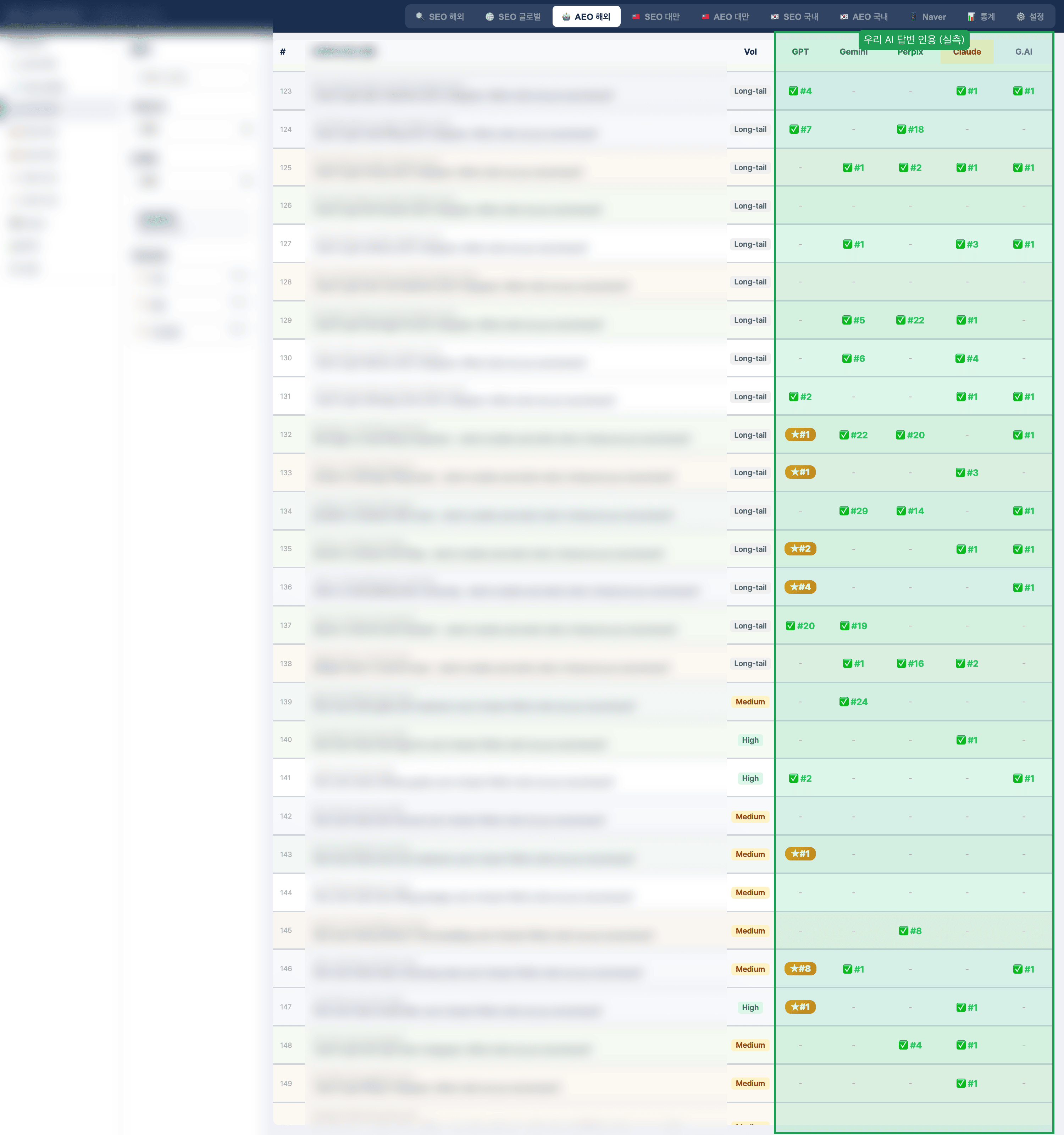
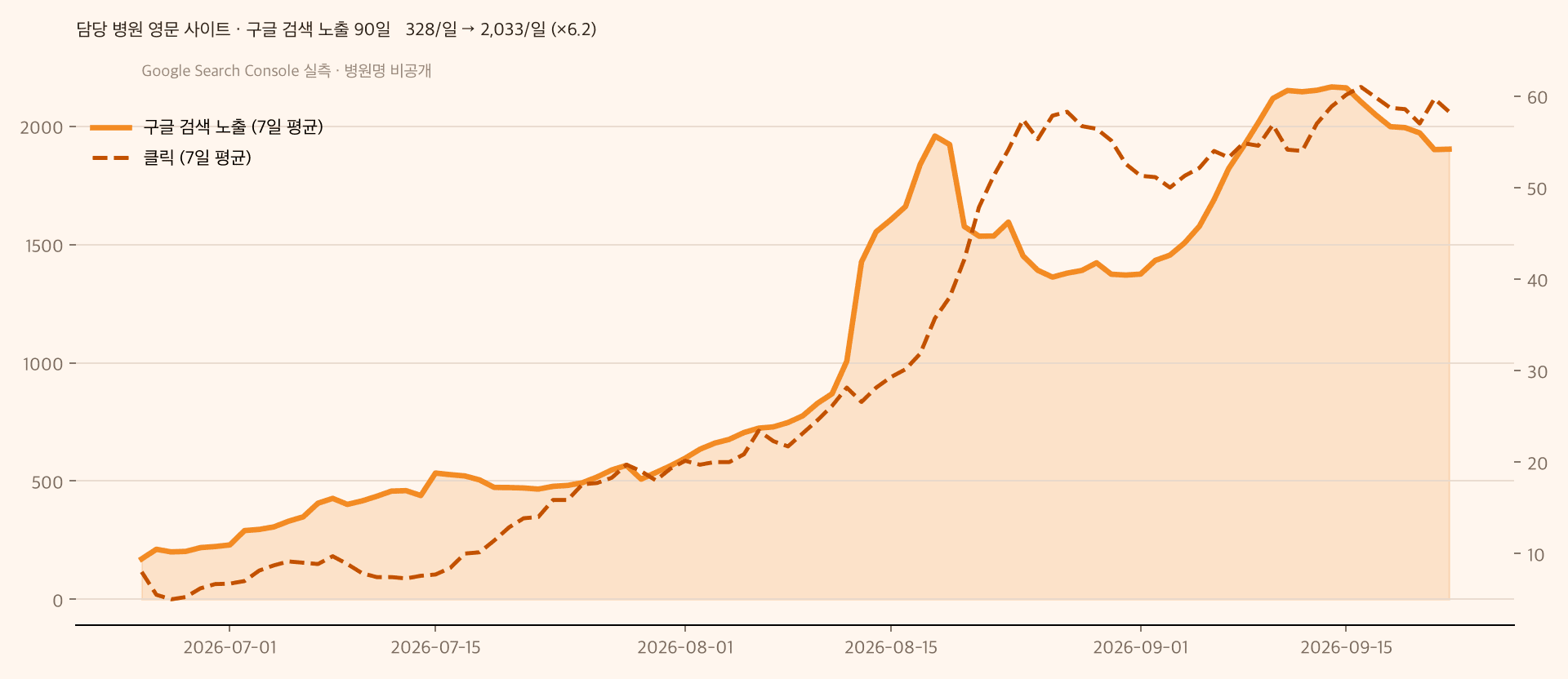
1 Basis: internal CRM records of two Seoul dermatology clinics, measuring foreign-patient revenue in the language lines assigned to us against each clinic's earlier baseline. Individual results vary with specialty, location, and competition. Names withheld under NDA; the live dashboards can be walked through on the call.
How does HEIM GLOBAL work next to your advertising agency?
We charge no ad-management percentage, and we do not ask you to move your ad accounts. We build and run the organic layer — treatment pages in the languages around you, AI-search visibility, and a 24/7 multilingual inquiry line — and we work non-exclusively next to whoever manages your paid campaigns.
$0 upfront — our fee is 30% of collected revenue from the patient lines you assign to us, CRM-verified, with no per-patient counting. Paid channels you run yourself normally stay outside that base, so nothing is billed twice; the exact base is agreed during the free audit. The usual three terms apply: $0 upfront · non-exclusive · monthly CRM settlement. For what agencies charge across the board, see healthcare marketing agency cost; for the choice between agency types, how to choose a medical marketing agency.
Which questions expose a weak healthcare ad agency?
Which of our accounts will you create, and in whose name? How is your fee calculated — flat, or a percentage of spend? A percentage of spend rewards spending. Do you import booked and paid outcomes from our CRM? Who checks ad copy against FTC, ASA/CAP, or AHPRA rules before it runs? Which certifications does our specialty need, and who applies? And what would you cut first if our budget halved? Agencies that answer that last one quickly understand your margins, not just the platforms.
'/%3E%3C/svg%3E)