
What does a medical website actually need to do?
Most briefs for a new practice site start with colors, photos, and a logo. Patients and search engines judge something else. Whether the site belongs to a GP practice, a dental office, a dermatology clinic, or a specialist, it succeeds or fails on four jobs — and each has a common way of failing.
| Job | Where practice websites usually fail | What good medical web design looks like |
|---|---|---|
| Be found | All services squeezed onto one page; content loaded by scripts after the page opens | One crawlable page per service, practitioner, and location, with consistent practice details |
| Answer | Marketing copy with no specifics on steps, recovery, fees, or who is suitable | The direct answer in the first lines, then detail a patient can act on |
| Convert | A booking link only on the homepage, a long form, no route after hours | A short request path from every page, on any phone, at any hour |
| Comply | Testimonials or results claims that break local rules; missing privacy wording on forms | Copy written to your market’s rules, practitioner details shown, consent on every form |
A site can look excellent and fail three of these. A plain site that does all four will usually outperform it in bookings.
How should the booking path work on a practice website?
From any service page, a patient should reach an appointment request in one or two taps, without hunting for a menu. On a phone that means a fixed button that stays on screen, and a request form that opens in place rather than sending the patient to another site. Ask for what your front desk needs to respond: name, a phone number, an email address, the service of interest, and a preferred time. Making both phone and email required sounds strict, but it is what stops inquiries arriving with no working way to reply.
Many requests arrive outside opening hours, and international or out-of-area patients write from other time zones. An inquiry that waits until the next morning often goes to the practice that answered first. That is why our hubs connect forms to a 24/7 multilingual response line and route every inquiry into your CRM, so each request can later be traced to collected revenue rather than counted as a “lead.”
How should service pages be structured on a doctor, dental, or dermatology website?
The same anatomy works across specialties; only the content changes. A dental implant page, a skin cancer check page, and a GP chronic-care page all answer the same underlying questions.
- A direct answer first. Two or three sentences that say what the service is, who it is for, and what it involves. This is the part search snippets and AI assistants quote.
- Suitability. Who is a good candidate, and who should choose something else.
- What happens. Steps, number of visits, how long each takes, aftercare or recovery.
- Fees. A realistic price range or how billing works, and what is included.
- Who provides it. A link to the practitioner’s own page with qualifications and registration.
- Questions. A short FAQ visible on the page, written in patients’ own words.
- The next step. The booking path, repeated at the end.
Around those pages sits a simple map: condition or need → service → practitioner → booking, with internal links in both directions. Dental website design adds treatment-specific pages patients search for by name, such as implants, aligners, and emergency care; a dermatology website separates medical and cosmetic services; a general practice site gives clear pages for appointments, billing, and the services each doctor offers. Structured data — Dentist, Physician, or MedicalClinic markup for the practice and FAQPage for visible question blocks — tells machines what each page is.
Why do speed and accessibility matter so much on a medical website?
Because the people who most need a doctor are often the least able to fight a slow or awkward site: an older patient on a small phone, someone with low vision using a screen reader, a parent searching one-handed. Google measures real-world loading and responsiveness through Core Web Vitals, and a page that is slow on a mid-range phone loses both rankings and patients before it has said anything.
In practice that means compressed images in modern formats, no heavy sliders or autoplay video above the first paragraph, text that reflows on narrow screens, buttons large enough to tap, and tracking scripts loaded after the page is usable. For accessibility, use WCAG 2.2 at level AA as the checklist: readable contrast, every image with a meaningful alt description, forms that label each field, and a layout that works with a keyboard alone.
Is a translation plugin enough for a multilingual medical website?
No. Machine-translated overlays are usually invisible to search engines in the target language and read poorly to the patients they are meant for. A multilingual medical website gives each language its own pages, written natively, with its own address and language tags, so a Spanish-speaking patient in Houston or a Chinese-speaking family in Sydney finds a real page when they search or ask AI in their own language.
The need is concrete: around 68 million Latinos live in the US, Sydney and Melbourne have large Chinese-speaking communities, and London treats more than 100,000 overseas patients a year. Local patients, most of them English-speaking, remain the base of any practice site; native-language pages add the upside without a second website to manage. How we run each language line is set out in multilingual patient acquisition.
What structure do search engines and AI assistants need from a clinic website?
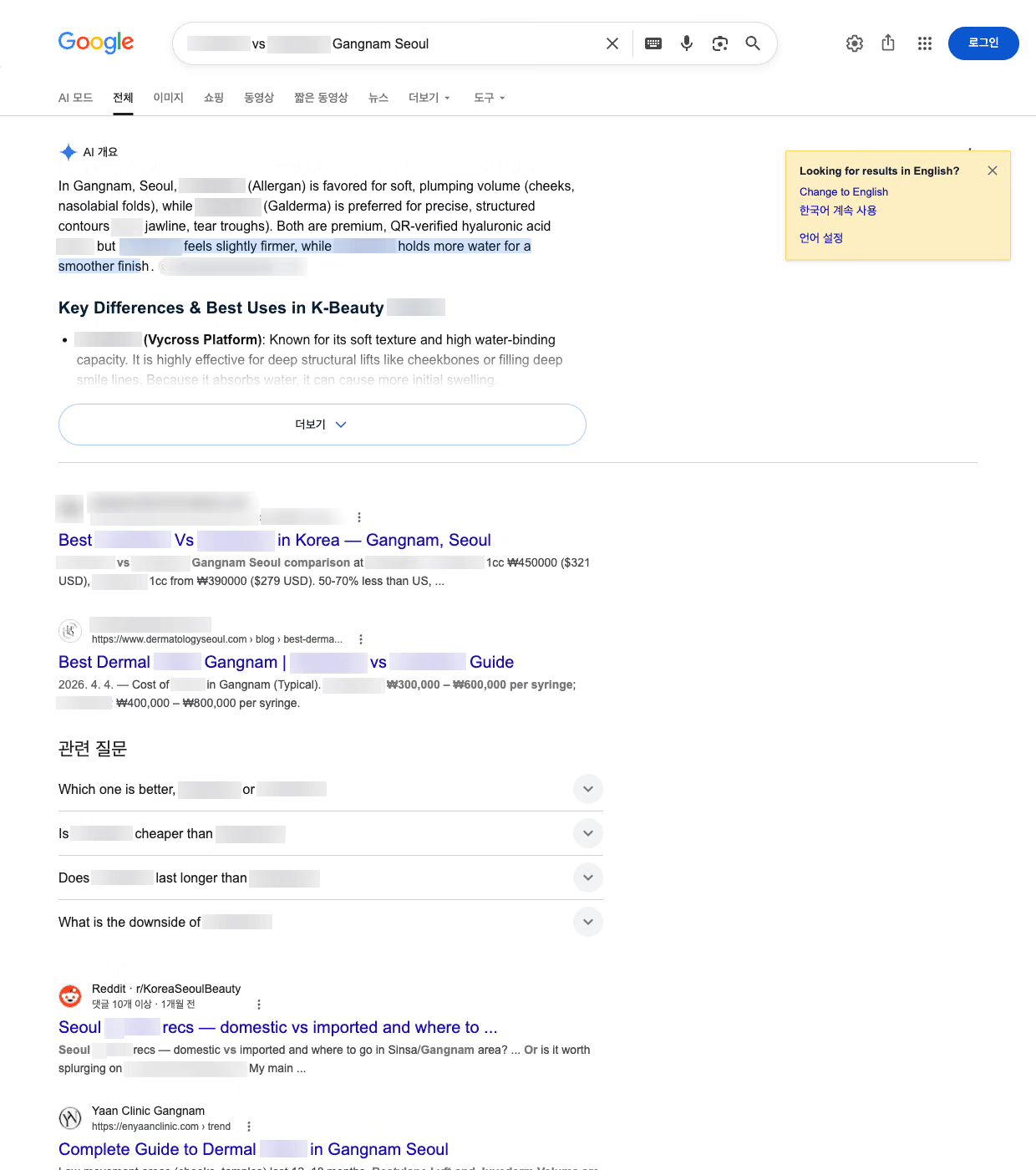
AI assistants do not rank pages; they lift sentences and cross-check facts. A site makes that easy when the main content is in the page’s HTML rather than injected by scripts, each URL covers one topic, the first lines of each page answer its question outright, practice name, address, and phone match the Google Business Profile exactly, and visible FAQ blocks match their structured data word for word. Gartner’s widely cited projection of a 25% fall in traditional search volume by 2026 is why that structure now matters as much as rankings.
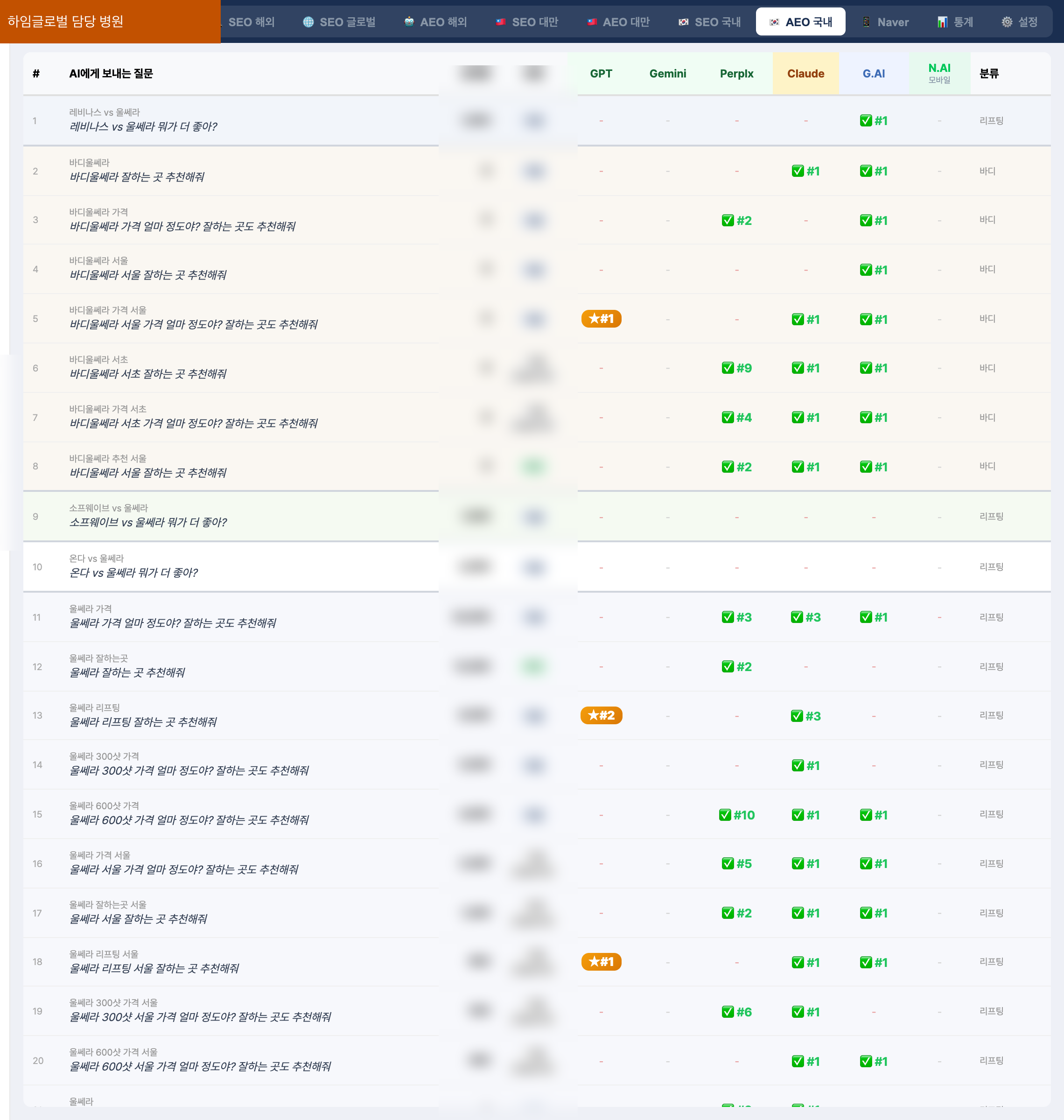
The full method sits in AI search optimization for clinics, and the reasons practices go missing from AI answers in why your practice isn’t showing in AI search.
What compliance details belong on a medical website in the US, UK, and Australia?
The website is advertising, and the practitioner stays responsible for it in every market. A few elements belong on every site: practitioner names with their qualifications and registration, a privacy notice, and consent wording on every form that collects patient details. Beyond that, the rules differ.
US
- Results and testimonials are read as typical outcomes under the FTC Endorsement Guides; disclaimers do not cure a misleading claim
- Agencies that publish misleading content share the liability
- Treat any form that collects health details as sensitive data under your privacy obligations
UK
- ASA/CAP rules require testimonials to be genuine and representative and bar promised outcomes
- Cosmetic pages cannot use time-limited offers or target under-18s
- Under GMC guidance the doctor remains responsible for what the site says
Australia
- AHPRA bars testimonials about clinical aspects, including sharing or linking to them
- Cosmetic procedure pages follow the guidelines in force from 2 September 2025
- Our Australian pages carry no testimonial material and no outcome claims
Australian practices will find more detail in AHPRA-compliant clinic marketing. Every page we write is sent to you for approval before it goes live.
How do you redesign a healthcare website without losing Google rankings?
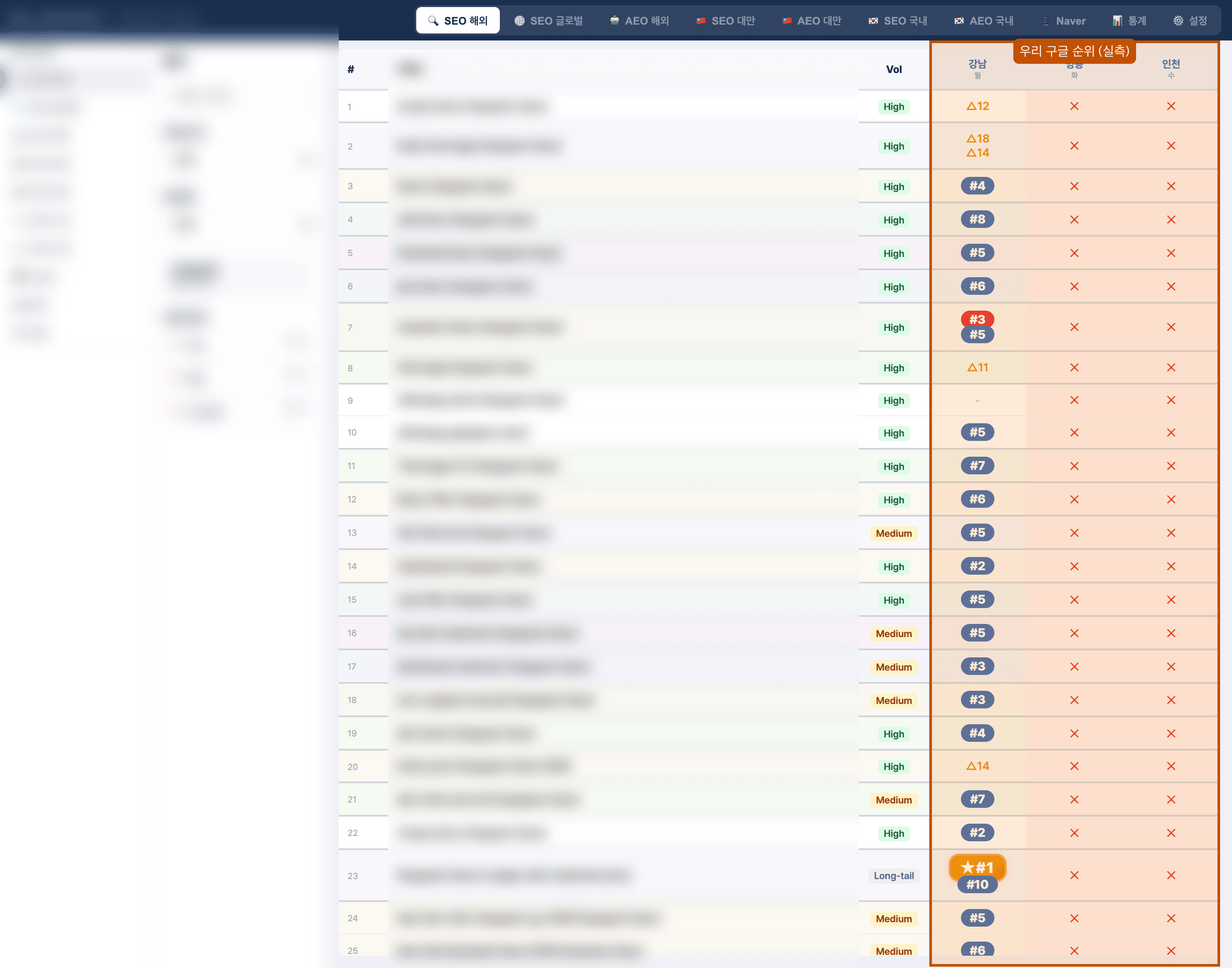
Redesigns are where practices most often lose the search visibility they spent years building, usually because pages that ranked were renamed, merged, or dropped. The safe order is simple. List every URL that receives search traffic today and keep it where it is whenever you can. Where an address truly has to change, redirect it once, permanently, to the closest matching new page. Carry the substance of ranking pages across rather than rewriting them from scratch. Remove any “noindex” setting left over from the staging site. Then watch positions every day for the first weeks, not once a month.
What does medical website design cost — a build fee, or 30% of results?
A conventional project bills a build fee, then hosting and maintenance, and the content is often left for the practice to write. SEO and AI visibility are usually a separate retainer; healthcare marketing retainers run $2,500–10,000 a month on published benchmarks. None of it depends on whether patients book.
We work differently, and it is worth being clear about what we sell. We do not take on one-off website builds for a fee. We build and operate a multilingual patient hub for your practice — service and practitioner pages in each language you serve, the booking path, tracking, and the 24/7 response line — at our own cost. $0 upfront; afterwards, 30% of collected revenue from the patient lines you assign to us, CRM-verified, with no per-patient counting. Your existing website can stay with your current designer. We ask for two links only: your Google Business Profile website field pointing to the hub, and one link from your own site.
| Line item | Typical web design project | HEIM GLOBAL operated hub |
|---|---|---|
| Upfront cost | Build fee | $0 |
| Ongoing cost | Hosting, maintenance, and a separate SEO retainer | 30% of revenue from assigned lines, nothing else |
| Content | Often written by the practice | Written natively in-house, approved by you |
| Languages | English, sometimes a translation plugin | Separate native pages per language line |
| After launch | Updates on request | Daily ranking and AI-citation tracking, pages added as questions appear |
| Contract | Project contract, often a hosting term | Non-exclusive |
The 30% is not a charge for patients: we never count, steer, or broker individual patients, and the fee is a flat marketing-services rate on a revenue pool read from your own records. Which lines you assign and what is excluded — typically existing patients — is designed around your practice during the free audit. In the US it covers cash-pay and self-pay services only, and practices in stricter states such as Florida, New York, and California can choose a flat-tier alternative. Three terms always apply: $0 upfront · non-exclusive · monthly CRM settlement. More on the model in no-retainer marketing agency.
Is there evidence that this kind of site structure works?
We have built and operate 7,767 pages in five languages for clinics in Seoul, a market where practices compete in several languages for more than two million international patients a year. At two Seoul dermatology clinics, foreign-patient revenue in the language lines we managed grew by +200% and +186%.1 Those clinics are not your specialty or your city, and results will differ; what transfers is the structure described on this page.
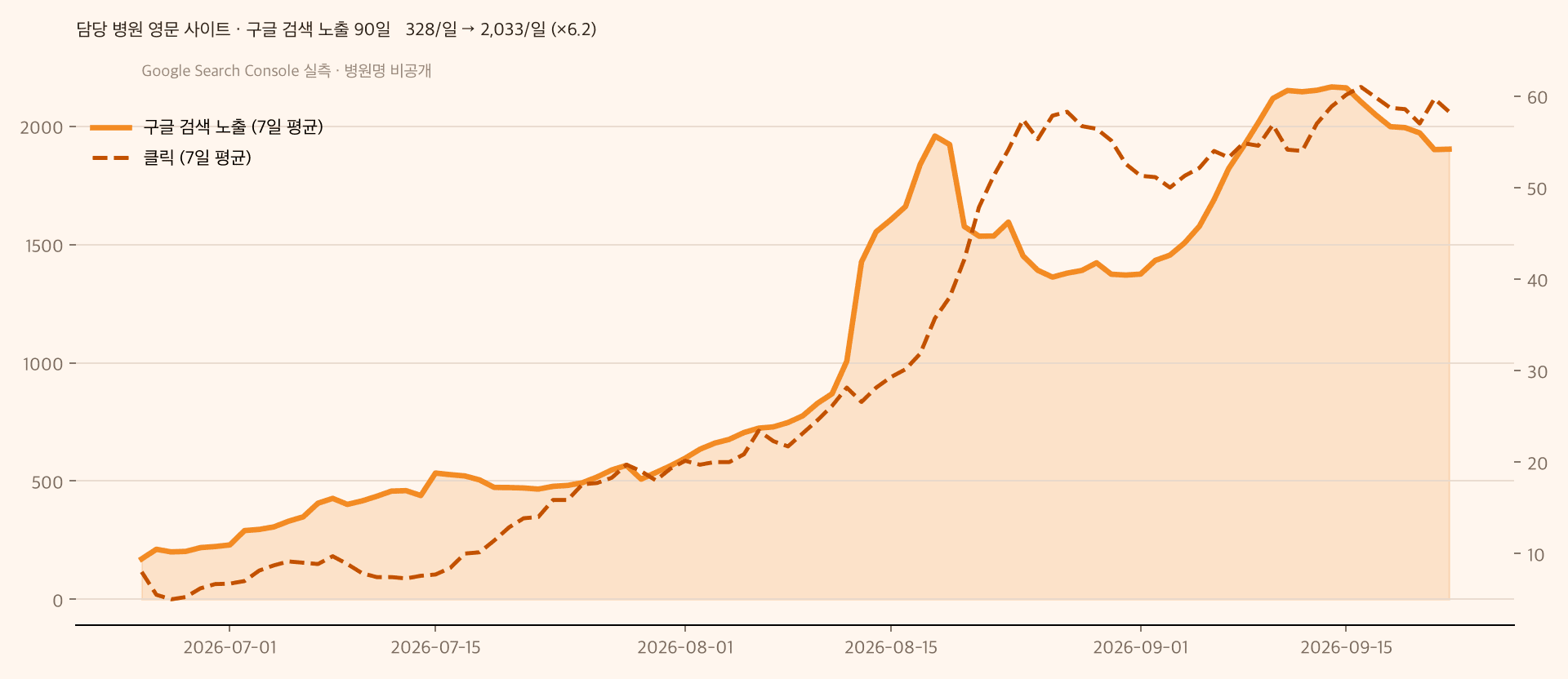
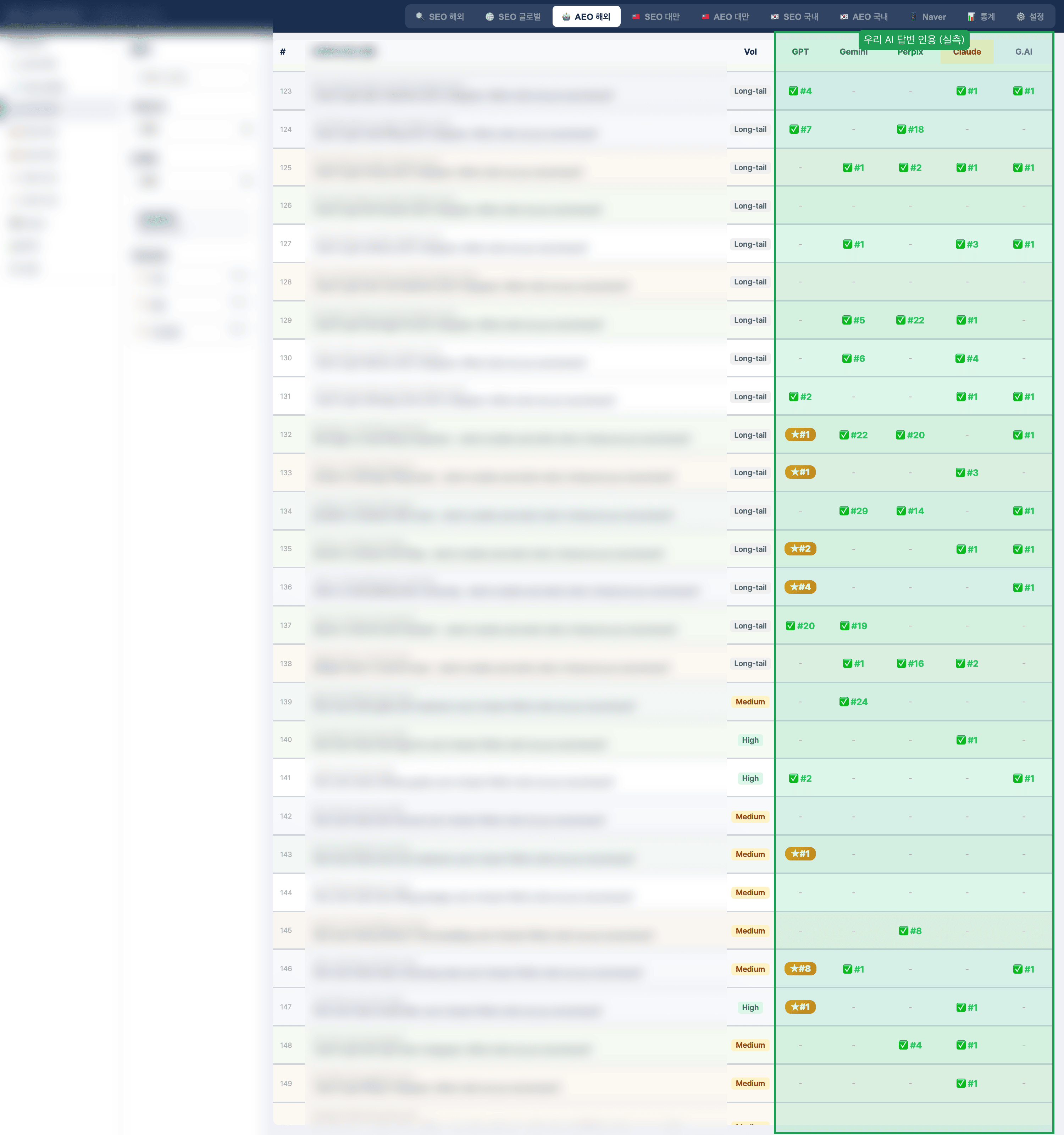
1 Internal CRM data, two Seoul dermatology clinics — foreign-patient revenue in assigned language lines against the prior baseline; individual results vary with specialty, location, and competition. Clinic names withheld under NDA; a full-screen walkthrough of the live dashboards is available on the call.
What should you ask a medical web design agency before you sign?
Who owns the domain, the hosting account, and the content? The domain should be registered to the practice. Can your team edit pages without paying for every change? Is the content in the HTML, or loaded by scripts that search engines and AI may not read? How does the site perform on a mid-range phone — ask for the Core Web Vitals report, not a desktop screenshot. Where do form submissions go, who can see them, and how are they stored? How will other languages be handled — native pages, or a plugin? And for a redesign: what is the redirect plan for every URL that ranks today? The free AI-visibility audit answers the search-side questions for your current site, whoever builds the next one.
'/%3E%3C/svg%3E)