What is generative engine optimization (GEO)?
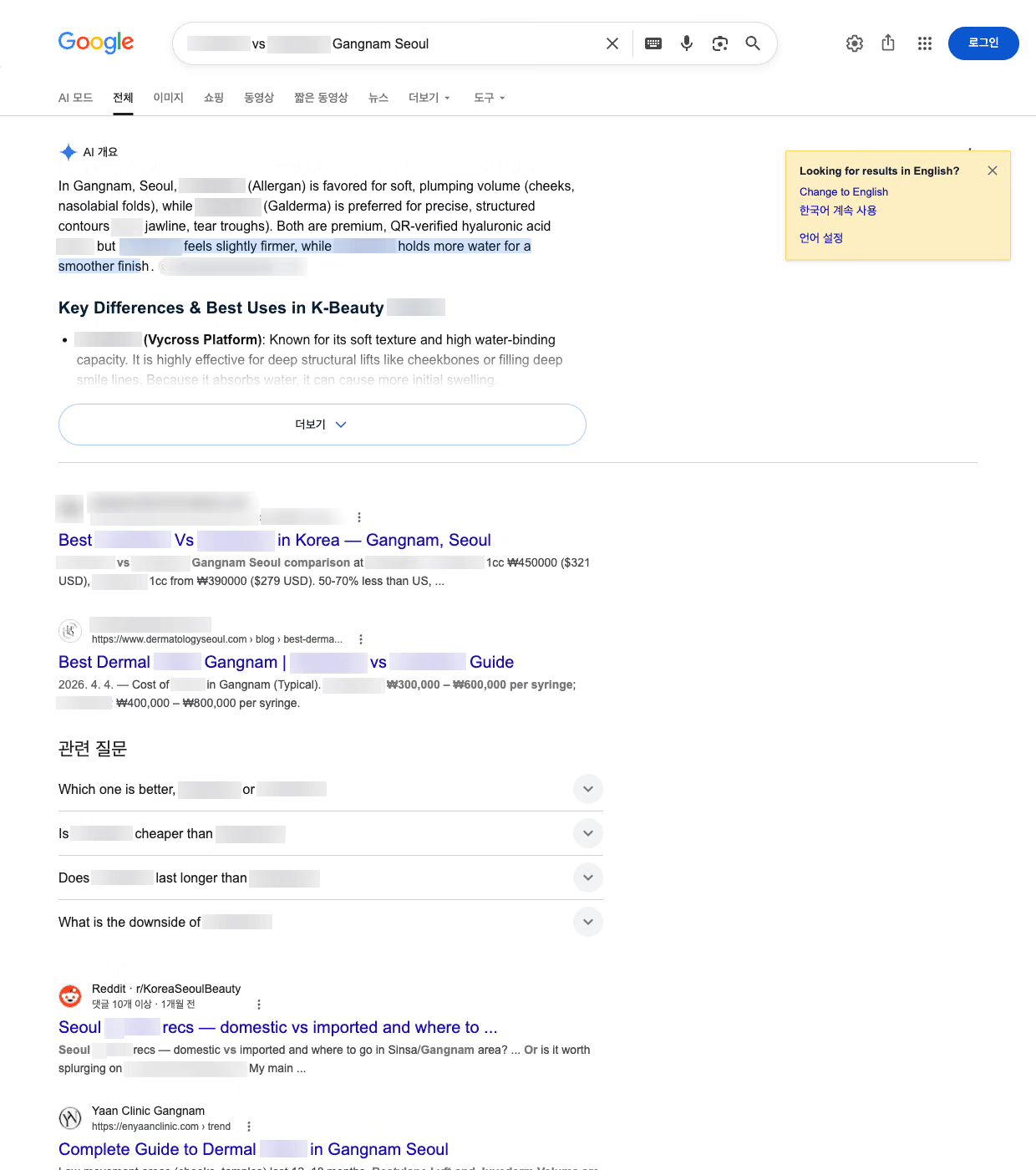
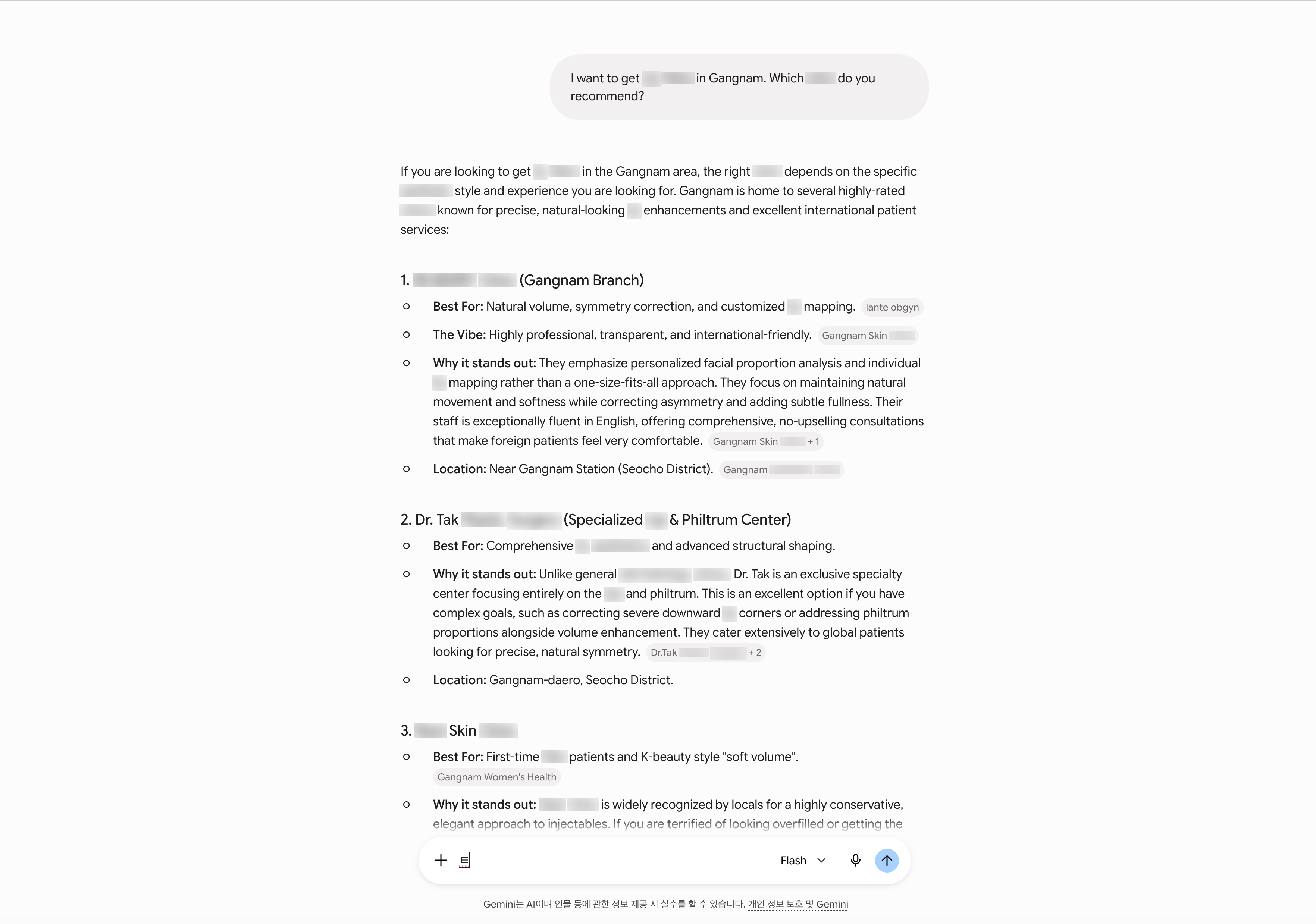
A generative engine is a system that retrieves sources and writes an answer from them — ChatGPT with search, Perplexity, Gemini, Claude with web access, and Google's AI Overviews all work this way. Generative engine optimization is the discipline of making your content more likely to be used, quoted, and credited in those answers. Success is not a rank number. It is whether your source appears in the answer, how much of the answer it shapes, and whether the engine names you while doing it.
The term was introduced in the paper GEO: Generative Engine Optimization by Pranjal Aggarwal and co-authors, first posted in November 2023 and published at KDD 2024, a major data science conference. Since then “generative engine optimization services” and “GEO agency” have become vendor categories, often attached to work that predates the paper. Knowing what the research did and did not show is the quickest way to tell substance from relabelling.
One point of vocabulary saves confusion: GEO here has nothing to do with geography or geo-targeting. A clinic will usually need both — local patients are the base of the business — but they are different jobs.
What did the original GEO research actually find?
The authors built GEO-bench, a set of about 10,000 queries drawn from nine sources across 25 subject areas, and tested nine ways of rewriting a source to see which ones made generative engines use it more. Their two main measures were a position-adjusted word count — how much of the answer comes from your source, weighted toward the top — and a subjective impression score of how prominent the source feels to a reader.
| Method tested | Result in the study | Clinic version |
|---|---|---|
| Cite Sources | Among the three strongest | Link each clinical claim to a regulator, guideline, or dated study |
| Quotation Addition | Among the three strongest; top performer on Perplexity for word count (+22%) | Attributed statements from named clinicians or published guidance — not patient testimonials |
| Statistics Addition | Among the three strongest | Sourced, dated figures: recovery ranges, session counts, price ranges |
| Fluency Optimization and Easy-to-Understand | Smaller but real gains; the authors describe a 15–30% boost from these stylistic rewrites | Plain language for anxious readers, reviewed for accuracy |
| Keyword Stuffing | Little to no improvement | Avoid — it adds nothing quotable and reads as low quality |
The headline figure from the paper is that the top methods — citing sources, adding quotations, and adding statistics — improved the position-adjusted word count by roughly 30–40% relative to the unmodified source, and the abstract describes visibility gains of up to 40%. Two caveats matter as much as the numbers. The authors report that which method works best varies by domain, so results on general queries do not transfer automatically to medicine. And these are controlled benchmark results, not measurements of any clinic's patient flow. Treat them as a direction, then measure your own market.
How does generative engine optimization apply to healthcare?
The three strongest methods line up with what medical content should do anyway; the risk is in applying them carelessly. Health is a high-stakes topic for search systems and for regulators, and a generated answer that repeats an inflated claim does more damage than a ranking ever could.
Cite sources — but the right ones
For a clinic, “cite sources” means linking claims to primary material: regulator information, specialty guidelines, peer-reviewed studies with dates. A device maker's brochure is not an independent source, and citing a competitor's blog adds nothing. The engines reward the presence of evidence; patients and regulators reward its quality.
Add quotations — from clinicians, never invented
Quotations helped most on Perplexity in the study. On a clinic page the safe form is a short, attributed statement from a named clinician at the practice or a line from published guidance, approved before it goes live. Patient testimonials are a different matter: in Australia, AHPRA does not permit testimonials about clinical aspects in advertising, and in the UK and US they are tightly conditioned. Our default is AHPRA-compliant pages with no testimonials at all.
Add statistics — dated, sourced, and honest
Engines favor specific numbers, and patients trust them. That cuts both ways. Give recovery times, session counts, and prices as ranges with a date and a source, and avoid single best-case figures. A statistic an engine repeats without context becomes your claim in someone else's answer.
What the paper did not cover matters for clinics too: whether the practice can be resolved as a consistent entity, whether pages exist in the language the patient asks in, and whether third parties corroborate what the site says. Those layers are explained in how AI decides which clinics to recommend; this page stays on the GEO research and its medical application.

GEO, AEO, LLMO, AI SEO — are they different things?
Mostly different labels for overlapping work. GEO comes from the research paper and frames the problem around generative engines. AEO, answer engine optimization, is the older marketing term for being the answer rather than a link. LLMO and “LLM SEO” emphasise large language models. Vendors pick whichever term their buyers search for. What matters is whether the work includes evidence-rich pages, consistent entity data, and daily measurement. The step-by-step method is in AI search optimization for clinics, and choosing a provider is covered in healthcare AEO agency.
Do ChatGPT, Gemini, Perplexity, Claude, and AI Overviews behave the same way?
No, and a GEO program that checks only one of them can be badly misleading. The engines differ in where their answers come from and how visibly they credit sources:
| Engine | Where answers come from | What it means for a clinic |
|---|---|---|
| Google AI Overviews | Generated on top of Google Search results, drawing on Google's index | Strong Google SEO is the entry ticket; the answer still favors pages that state things plainly |
| ChatGPT | Model knowledge, plus live web search when the question calls for it | Fresh, specific pages matter for searched answers; consistent facts matter for the rest |
| Gemini | Model knowledge with Google Search grounding | Entity data that matches your Business Profile helps it resolve the clinic |
| Perplexity | Live retrieval on almost every question, with sources shown | The most visible citations; quotable, attributed content performs well |
| Claude | Model knowledge, plus web search where enabled | Same fundamentals; checked separately because its answers differ |
Answers also shift with the session, the wording, and above all the language. A patient asking in Spanish or Chinese gets an answer assembled from sources in that language, so an English-only clinic is absent there however well it does in English. That is why we write five languages natively and measure each one separately.
How do you measure generative engine optimization for a clinic?
The research measured how much of an answer came from a source and how prominent it felt. A clinic needs the practical equivalent, logged daily, because answers change from day to day:
- Inclusion — is the clinic named at all for each tracked patient question?
- Position — first recommendation, or fourth in a list?
- Attribution — which sources does the engine cite, and is the clinic's own page among them?
- Competitor share — who is named instead, and how often?
- Language — the same set, asked in each language the practice serves.
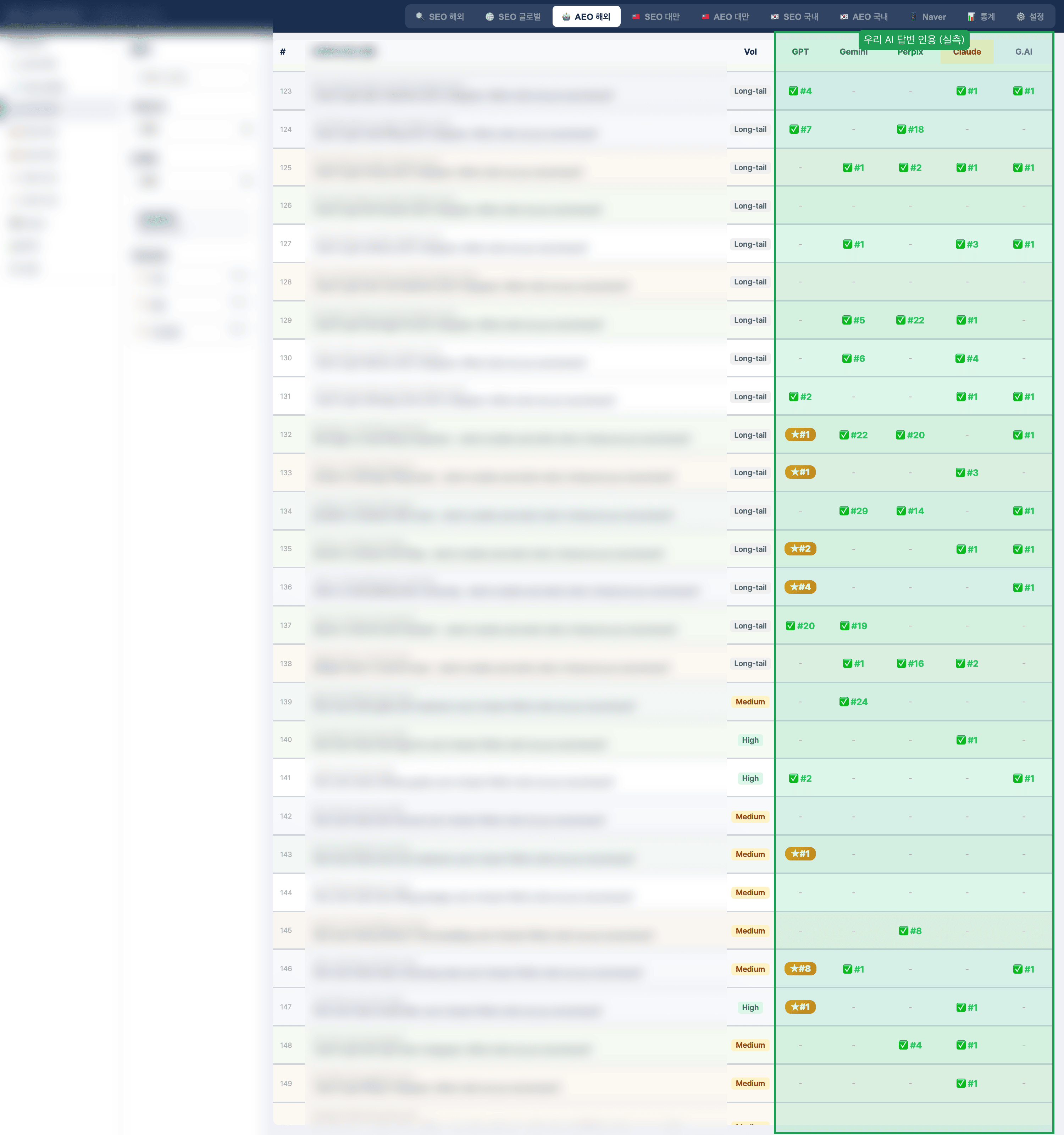
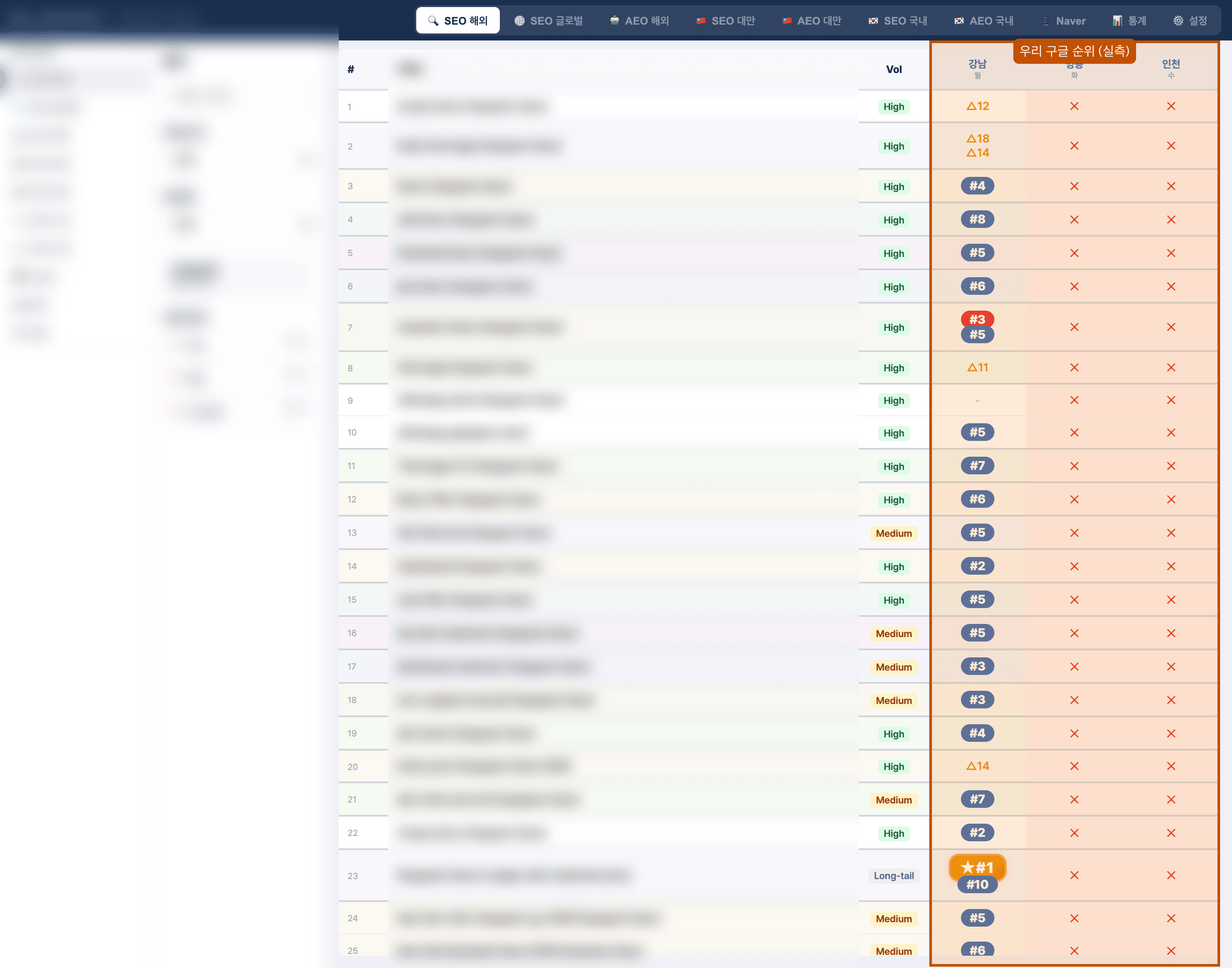
Citations are a means, not the result. The same measurement chain continues into search data and money: positions on Google, impressions in Search Console, enquiries, and finally revenue in the clinic's CRM.
What can't GEO do — and which claims should you distrust?
No one can buy or promise a place inside an AI answer; no engine sells placement in its organic answers, and the answers vary between sessions. A vendor quoting “up to 40%” is quoting a benchmark on general queries, not a forecast for your practice. Mass-produced AI-written pages are a particular risk in healthcare: errors repeated at scale, under your name, on a topic where accuracy is the point. And invented statistics or quotations, the cheapest way to imitate the research findings, are the fastest way into trouble with the FTC, ASA/CAP, or AHPRA. Gartner's projection that traditional search volume will fall 25% by 2026 explains the urgency. It does not justify cutting corners.
Is there evidence this works for clinics?
Our evidence comes from Seoul, where clinics compete in five languages for two million international patients a year. The trackers above are the instruments; the outcome is two dermatology clinics whose foreign-patient revenue in the language lines we managed grew by +200% and +186%.1
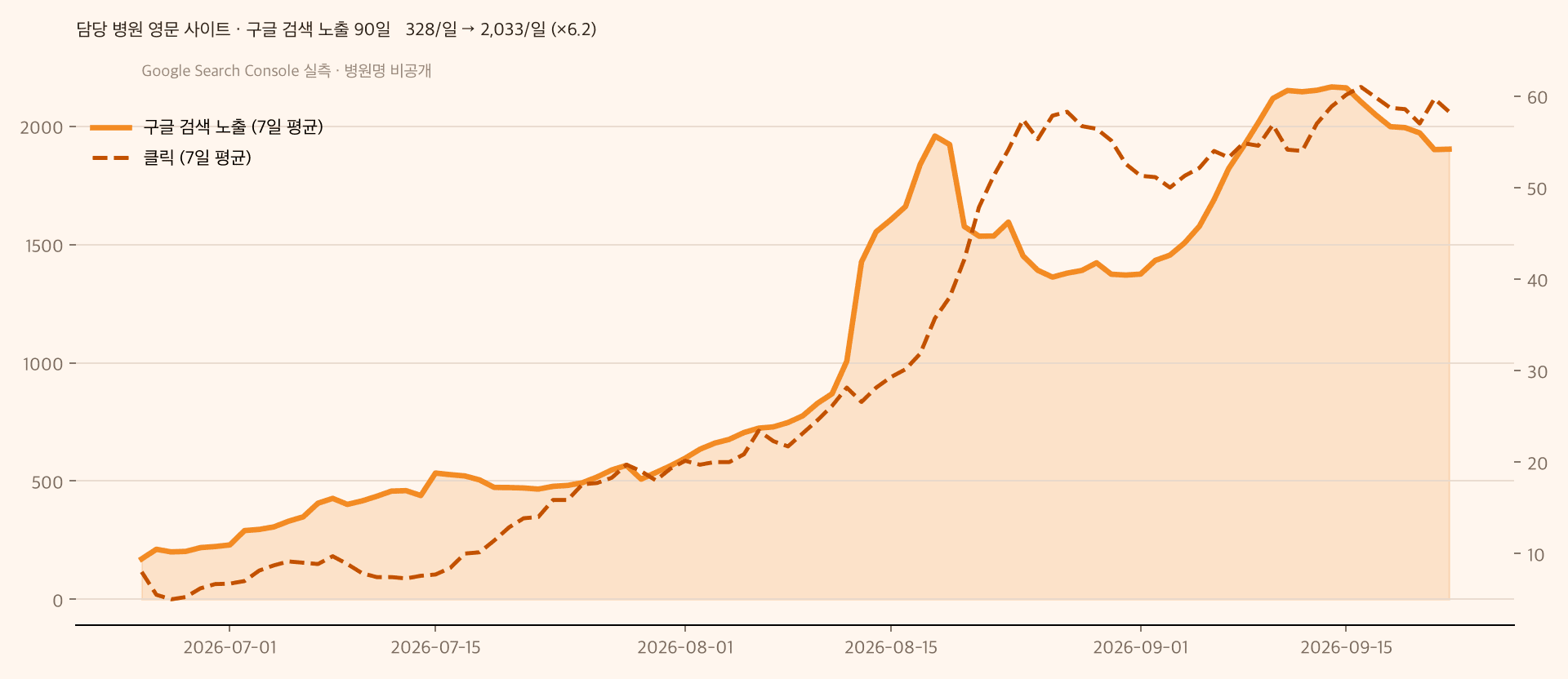
1 Source: the clinics' own CRM records — foreign-patient revenue in the language lines assigned to HEIM GLOBAL against each clinic's earlier baseline. Individual results vary by specialty, location, and competition. The clinics are not named because of NDAs; live dashboards are shown on the call.
What does generative engine optimization cost?
Most GEO and AEO agencies price behind a custom quote, often as an add-on to a healthcare marketing retainer that typically runs $3,000–8,000 a month for a single location. Ours is one line: $0 upfront — 30% of collected revenue from the patient lines you assign to us, CRM-verified, with no per-patient counting. We fund the pages, the daily tracking, and the 24/7 multilingual response line. The base — which lines, and what is excluded, such as existing patients — is designed around your practice during the free audit. It is a flat marketing-services rate on a revenue pool, not a payment per patient. Three terms travel with it: $0 upfront · non-exclusive · monthly CRM settlement. The free AI-visibility audit shows where your clinic appears today across ChatGPT, Gemini, and Google — and what the engines say instead.

'/%3E%3C/svg%3E)