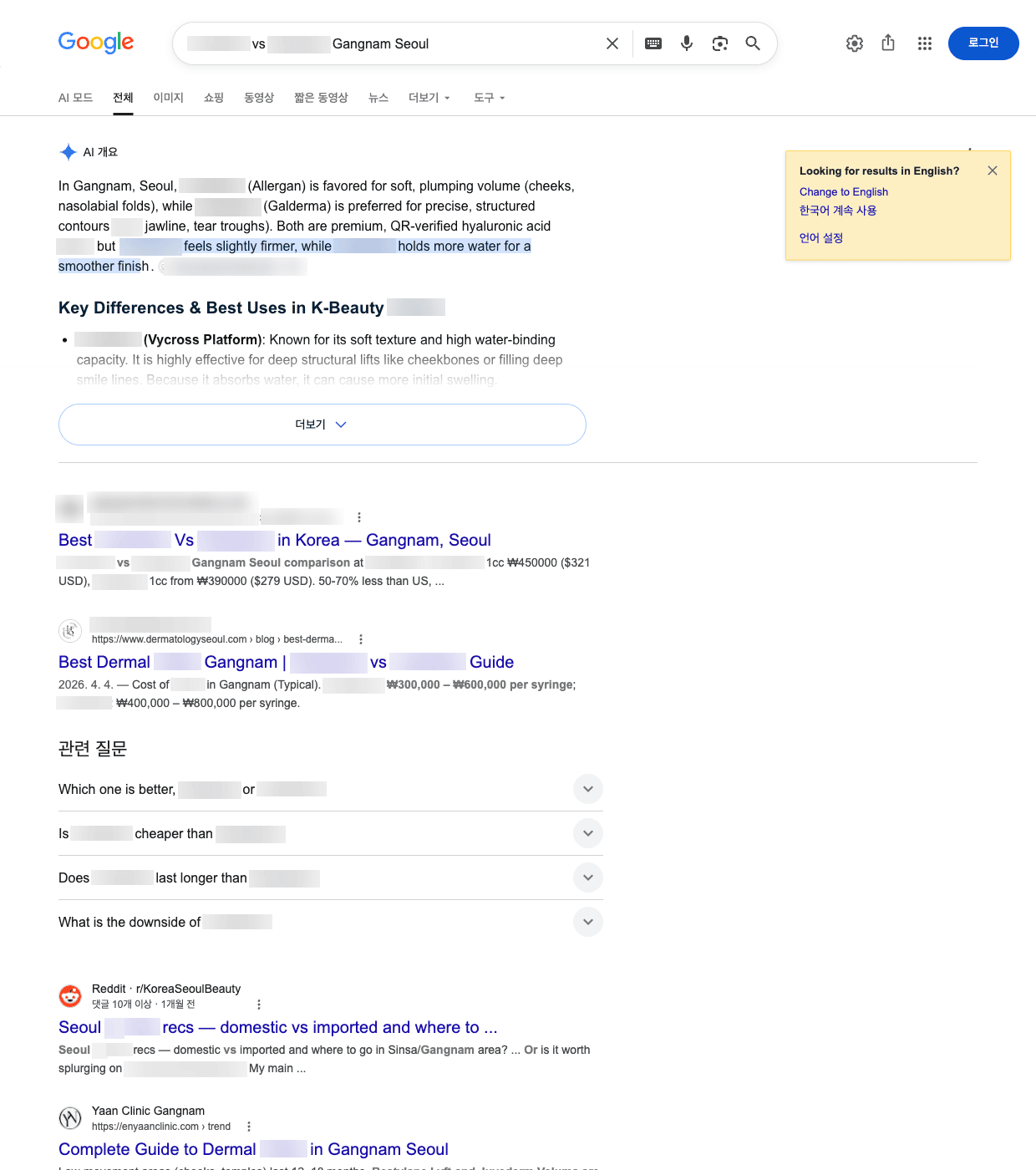

What is an international patient marketing agency?
An international patient marketing agency builds the visibility and infrastructure that let a clinic win patients beyond its walk-in radius: multilingual content assets, search rankings in the languages patients actually use, citations inside AI answers (ChatGPT, Gemini, Google's AI Overviews, Perplexity), and response systems on the messengers those patients live on — WhatsApp, LINE, WeChat. The output is not a batch of leads; it is a durable asset base that keeps producing after the work is done.
That distinguishes it from the two categories it is most often confused with. A medical tourism facilitator is a broker: it recruits individual patients, hands them to a clinic, and keeps 25–30% of each brokered case — counted by hand, patient by patient. A retainer agency sells activity: hours, reports, and ad management billed at $3,000–8,000 a month, results or not. An asset-building marketing agency sells neither heads nor hours — it sells measured revenue growth, and the honest ones price themselves so they only earn when the clinic does.
The label matters less than the mechanics. Before signing anything, ask three questions: What do I pay for — patients, activity, or measured results? Who owns the assets when we part ways? And how is the fee verified — someone's spreadsheet, or my own CRM?
Facilitator, retainer agency, or performance partner — which model are you actually buying?
The three categories look interchangeable on a sales call. Priced out over twelve months, they behave nothing alike. This is the category map — no vendor names, just the structures you will encounter.
| What you're comparing | Medical tourism facilitator | Retainer agency | Performance-based asset agency (us) |
|---|---|---|---|
| Pricing | 25–30% of each brokered case | $3,000–8,000/mo, results or not | $0 upfront — 20% of revenue from the patient lines you assign |
| What you pay for | Individual patients, counted by hand | Activity — hours and reports | Measured revenue in your own CRM |
| Attribution | Manual headcounts, disputes common | Last-click debates | One monthly CRM export — no per-patient counting |
| When you stop paying | Pipeline stops same day | Ads off — visibility gone | Content assets keep working |
| Who owns the assets | No assets built | Often the agency | Coverage and links stay with your clinic |
| AI search (AEO) | No | Unproven add-on | 4-engine citation tracking, daily |
| Lock-in | Sometimes | Often 12-month terms | Non-exclusive · cancel anytime |
One structural note on the facilitator model: because it is paid per brokered case, it has no reason to build anything your clinic keeps. The retainer model has the opposite flaw — it gets paid whether anything compounds or not. The test for the third category is simple: if the revenue does not materialize in your CRM, the agency should not get paid. That is the entire incentive design.
Why do domestic and international patients run on the same engine?
The most common misconception is that international patient marketing is a separate machine bolted onto the side of a practice. It is not. Patients in your own city have stopped scrolling results pages — they ask ChatGPT, Gemini, and Google's AI Overviews which clinic to book. The pages that win those citations are built exactly the way pages that win international patients are built: real answers to real patient questions, evidence, clear structure, schema markup, third-party corroboration.
So the sequence is: domestic patients build the base, international patients add the upside. The English-language pages that grow your local patient flow are the foundation the multilingual lines are built on — the domain authority, the citation history, the review signals all compound in both directions. An agency that treats the two as separate budgets is selling you the same engine twice.
This also changes what "results" means. A facilitator can only report headcounts. A dual-axis asset agency reports rankings, AI citations, traffic, and — the only number that finally matters — collected revenue in the patient lines it is responsible for, read out of your CRM.
How does this play out in the US, UK, and Australia?
The engine is the same; the entry point differs by market. These are the three plays we design audits around.
US — domestic-first, then win-back
- Your next domestic patients are already asking ChatGPT and Google's AI Overviews which clinic to book — AI-search visibility wins them first
- ~850,000 Americans fly abroad for dental work every year — a win-back audience your content can reach before they book the flight
- 68 million Spanish speakers in the communities around you — served natively by the same 5-language asset methodology
- Cash-pay and self-pay services only; any federal-program business is excluded from the fee base
UK — inbound self-pay leads
- London treats 100,000+ overseas patients a year, concentrated in the self-pay market around Harley Street — Gulf and high-net-worth inbound is a real, existing segment
- Domestic self-pay patients researching through AI steadily thicken the base underneath
- Content produced with GMC and ASA/CAP standards in mind — no promised outcomes, no promised rankings
AU — AHPRA-compliant, community-led
- AHPRA-compliant AI-search visibility grows local patient flow first — written to the 2025 advertising guidelines, no patient testimonials, no outcome claims
- Sydney and Melbourne's large Chinese-speaking communities are addressable in their own language, on their own messengers
- Genuine IVF inbound from Southeast Asia as the upside line
What should an international patient marketing agency cost?
Here is the model we run, in full, because a pricing section you have to book a call to see is a red flag in its own right. $0 upfront — our fee is 20% of revenue from the patient lines you assign to us, CRM-verified, with no per-patient counting. While typical healthcare marketing retainers run $3,000–8,000 a month regardless of results, we charge nothing until revenue materializes in your CRM. Content production, domains, hosting, tracking, and the 24/7 multilingual response line are funded by us.
The exact base is designed around your practice during the free audit, before anything is signed — which lines you assign (domestic, international, or both), what counts as new revenue, and what is excluded automatically: existing patients, channels you run yourself, patient lines we don't manage, and any federal-program business in the US. Settlement is one monthly CRM export — your CRM is the single source of truth, so there is nothing to argue about.
Four structural terms always travel with the 20%: $0 upfront · non-exclusive · cancel anytime · monthly CRM settlement. And one legal clarification worth stating plainly: this is not a payment for sending patients. We never count, steer, or broker individual patients — the 20% is a flat marketing-services rate on a revenue pool we are responsible for growing. Have your healthcare attorney review the agreement; we expect it.
| Term | How it works |
|---|---|
| Rate | 20% flat — five new patients or five hundred, the rate never moves |
| Base | Collected revenue from the patient lines you assign — designed with you during the free audit |
| Verification | Your CRM — one monthly export, no per-patient counting, no receipts |
| Upfront cost | $0 — no retainer, no setup fee |
| Exclusivity | None — keep your current agency, run your own ads |
| Cancellation | Anytime — no lock-in, no termination fee |
Why does "proven in Seoul" matter for your clinic?
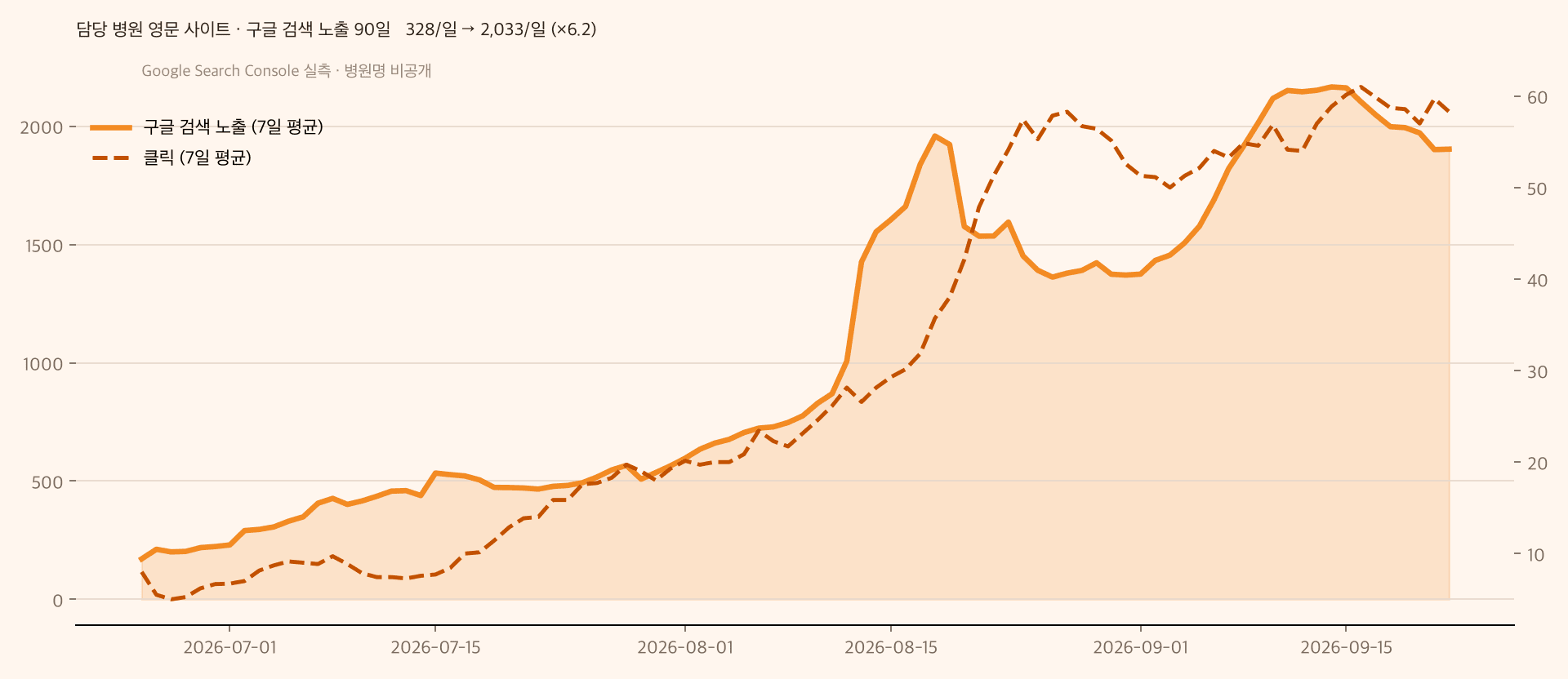
Seoul is the world's most competitive medical tourism market — two million international patients a year, and medical marketing fought in five languages at once. Ranking there, and being cited by AI there, is the credential we bring to your market. Two documented cases, both dermatology clinics, both measured the same way:
What should you ask before signing with any agency?
Whether you talk to us or anyone else, these six questions separate the categories in one call. First: what do I pay for — brokered patients, billable hours, or revenue verified in my own CRM? Second: who owns the assets — if we part ways in a year, do the pages, press coverage, and domain authority stay with my clinic or leave with the vendor?
Third: show me the tracking — a monthly PDF is not a dashboard; ask to see live rank tracking and AI-citation measurement during the sales call, not after signing. Fourth: how is attribution settled — if the answer involves tracking numbers, manual headcounts, or "our analytics," expect disputes; if it is one export from your own CRM, there is nothing to dispute. Fifth: what happens when I stop — lock-ins and 12-month terms exist to outlive buyer's remorse. Sixth: is the content compliant in my market — AHPRA 2025 in Australia, GMC and ASA/CAP in the UK, FTC endorsement rules in the US.
Our answers are on this page. The free AI-visibility audit exists so you can check them against your own market before anything is signed: where your clinic appears today across Google, ChatGPT, and Gemini — free, no obligation.
'/%3E%3C/svg%3E)